
Food · 27 October 2026
Dabo: Ge'eza's Homemade Ethiopian Bread, 1,000 F
Dabo is Ge'eza's homemade Ethiopian bread, served with honey, for 1,000 F. A companion to the coffee ceremony, included in the full ceremony, and just as at home as a short break on its own.
Dabo is the homemade Ethiopian bread served at Ge'eza, in Point E. Round, dense and lightly sweet, it accompanies the coffee ceremony and is eaten with honey. Ordered alone it costs 1,000 F; it is also included in the full coffee ceremony, at 7,000 F per person.
A simple bread, built to go with coffee
Dabo is not a dish in its own right: it is a bread that sits on the table during the coffee ceremony, or works just as well for a shorter break. Its texture is dense, somewhere between a loaf and a lightly sweetened brioche, with a soft crust. It is served warm, torn into small pieces that are dipped into the honey served alongside it.
Dabo during the coffee ceremony
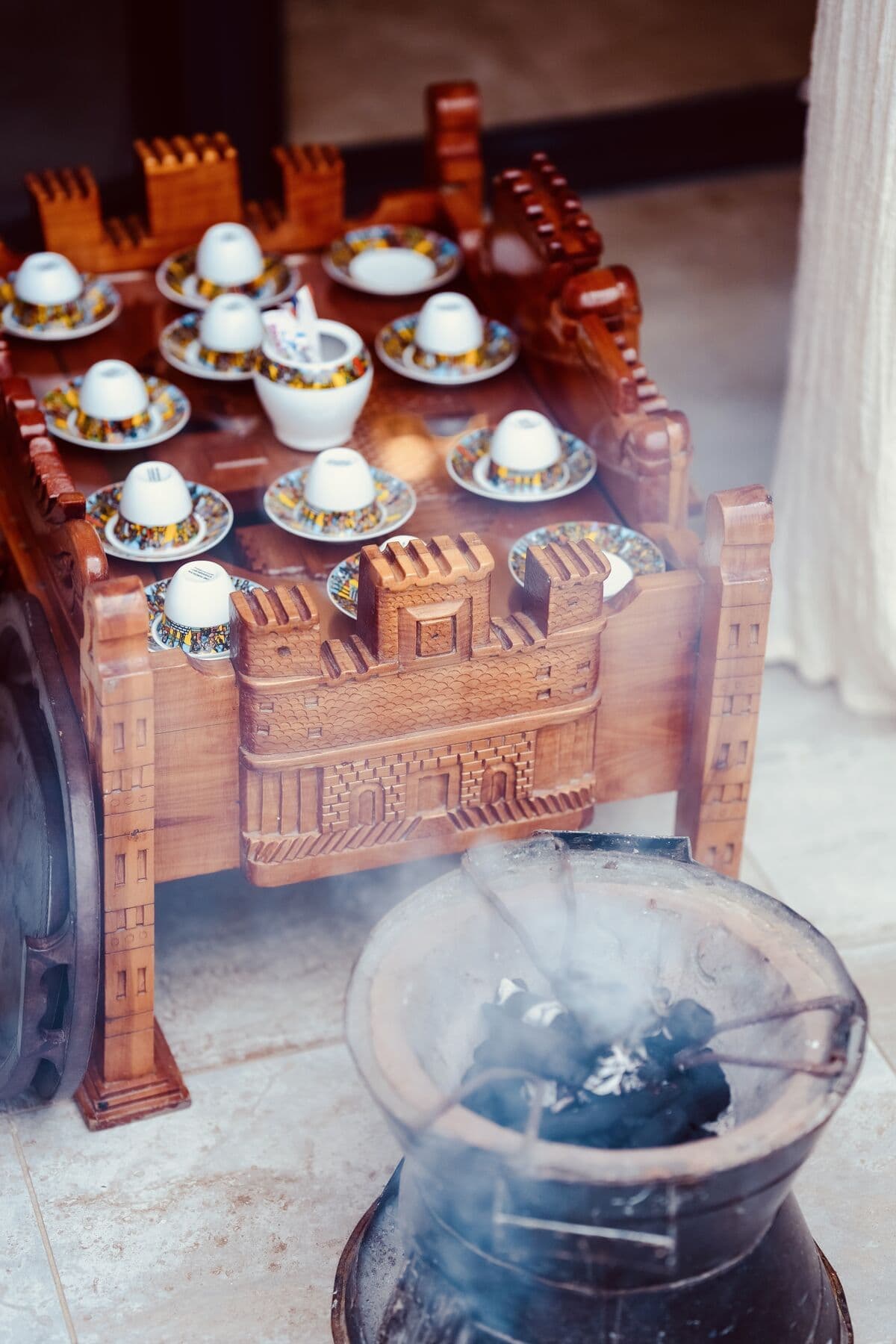
Through the three rounds of the ceremony, Abol, Tona and Baraka, dabo sits on the table and is picked at between cups. Its role is simple but essential: it softens the mouth between sips of coffee that can be quite strong, and it gives guests something to do during the quieter moments of the ritual, while the embers heat and the incense burns. In the full ceremony at 7,000 F per person, dabo is included alongside the three rounds and the incense. For the full shape of the ritual, the coffee ceremony page walks through each step, from the incense to the three rounds.
Ordering it on its own
Dabo can also be ordered outside the ceremony, for a shorter break, at 1,000 F, served with honey. It is a simple way to try Ethiopian bread without setting aside the 45 minutes the full ritual takes. The article afternoon coffee and snacks in Dakar covers the other snacks and sweets on the menu worth pairing it with, such as sambusas or baklava.
Bread as a gesture of hospitality
In Ethiopia, offering bread to a guest is one of the oldest gestures of hospitality. Dabo fits into that same idea: nobody is received empty-handed, and bread, like coffee, is meant to be shared. Ge'eza does not claim to follow any particular family recipe: the house serves its own homemade version of dabo, as listed on the menu, without attaching it to a specific regional tradition. What stays constant is the idea that bread accompanies time spent together rather than a rushed meal.
What to pair it with
Dabo is mostly eaten with honey, the way it is served on the menu. During the ceremony, it follows the rhythm of the three rounds: a piece after Abol, the strongest round, another after Tona, more nuanced, and the last with Baraka, the gentlest cup that closes the ritual. The article Abol, Tona, Baraka breaks down what sets each cup apart, useful for knowing when dabo pairs best with the coffee.
A lighter break than the savoury snacks
Compared with the meat or lentil sambusas, dabo stays on the lighter side, with no frying and no spiced filling. It suits a morning or late-afternoon break well, away from meal times, or anyone who prefers a simple sweet bite over a composed dish. It works just as well alone as shared, set in the middle of the table for everyone to tear off a piece.
Booking your ceremony or your break
For the full ceremony with dabo included, it is best to book 24 hours ahead, especially for a group, through the coffee ceremony page or by WhatsApp at +221 78 660 07 07, with confirmation by the same channel or by phone. For a simple break with dabo on its own, no booking is needed during opening hours, Tuesday to Sunday, 8am to 10pm.
Dabo and injera, two different breads
On Ge'eza's menu, two breads play very different roles. Injera, the large fermented flatbread, serves as the base and the utensil for the main dishes: wot or tibs are set on top of it, and it is also used to scoop up the food. Dabo does not accompany a composed dish: it is eaten on its own, torn into small pieces, with honey, during the coffee ceremony or outside it. Both are Ethiopian breads, but their texture, preparation and role at the table have little in common. Mixing the two up is an easy mistake for anyone new to the menu: injera is spongy and slightly tangy, while dabo is dense and sweet.
For a guest short on time
For anyone with only a few minutes between appointments in Point E, dabo offers a quick option: it is served straight away, with no preparation in front of guests, unlike the full ceremony, which takes about 45 minutes. It is a way to taste part of the Ethiopian coffee world without booking ahead. For a longer moment, one that includes watching the roasting, grinding and three-round service, it is better to plan the full ceremony and book in advance, especially if several people need to free up the same time slot.
Frequently asked questions
How much does dabo cost at Ge'eza?
1,000 F ordered on its own, served with honey. It is also included in the full coffee ceremony, at 7,000 F per person.
Is dabo sweet?
It is lightly sweet, and is eaten with the honey served alongside it on the menu.
Can I order dabo without doing the coffee ceremony?
Yes, it can be ordered on its own for 1,000 F, for a shorter break, during opening hours.
Does dabo follow a specific family recipe?
Ge'eza serves its own homemade version of dabo, as listed on the menu, without attaching it to a particular recipe.