
Guide · 22 October 2026
Buying Your First African Painting: How to Choose Well
Choosing a first African painting takes fewer rules than it seems: look at several pieces, compare formats, ask for an exact price, and check the certificate before paying.
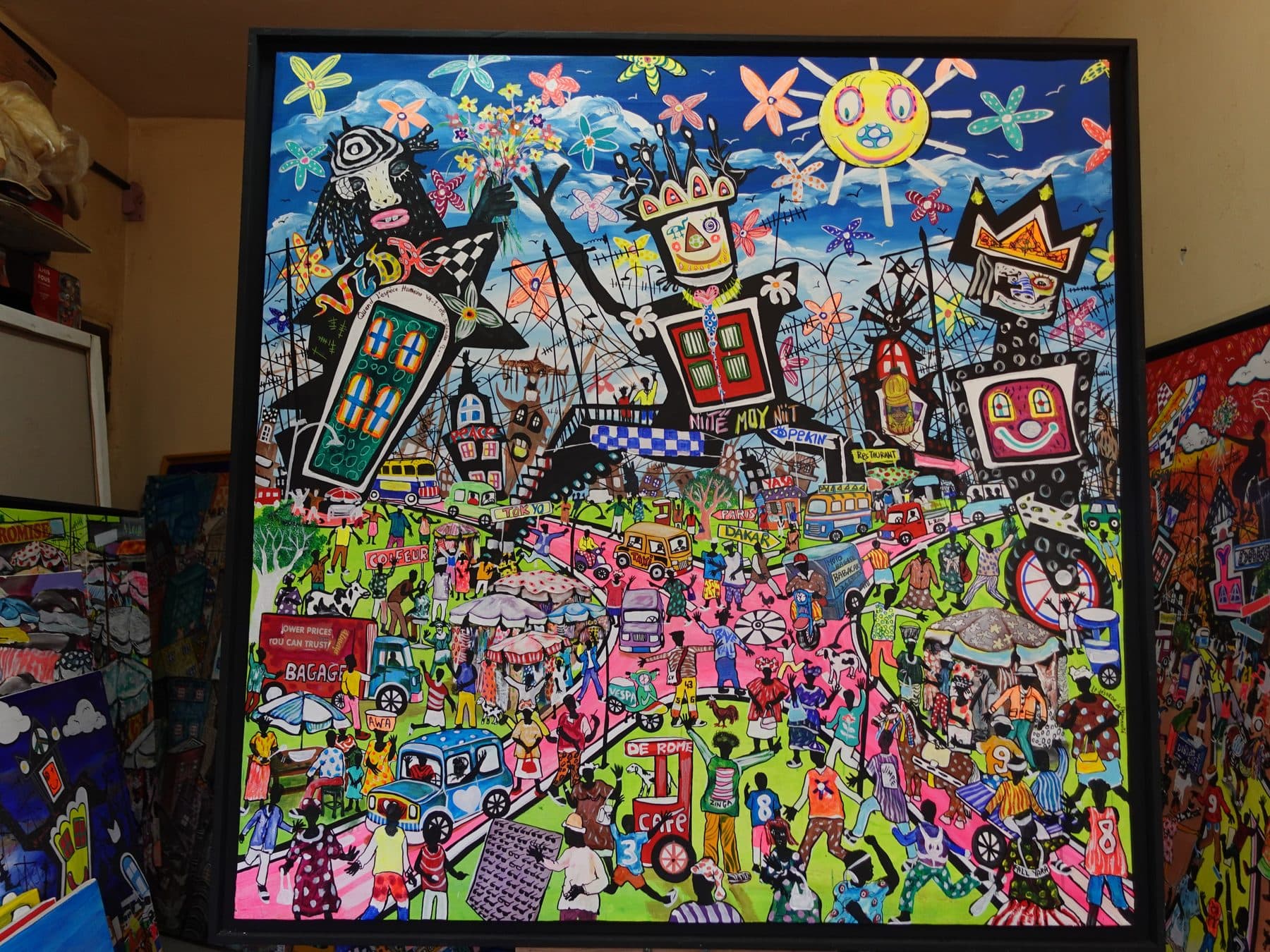
Buying a first African painting mostly comes down to method: look at several pieces before choosing, compare formats and techniques, ask for an exact price on the one that catches your eye, then check that a certificate of authenticity comes with the purchase. None of these steps require prior knowledge of the art market, and all of them work just as well in person as from a distance.
Looking before choosing
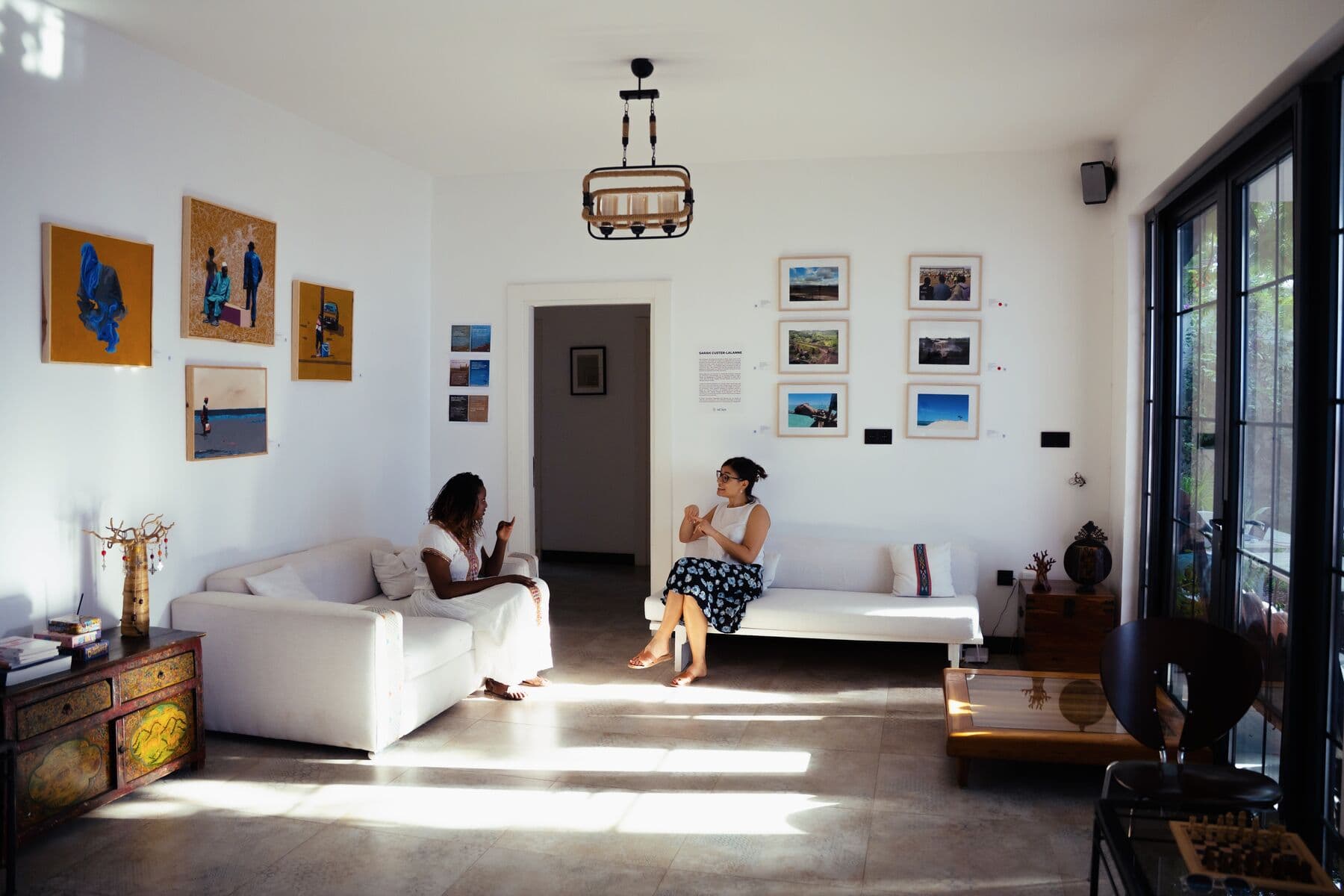
The most common mistake with a first purchase is deciding too quickly in front of a single piece. It helps to compare several canvases, come back to the ones that stay on your mind after a while, and give yourself time to see which one still appeals once you are home. At Ge'eza's gallery, the work currently on show comes from Ibou Diagne, Saadio and Tampidaro, three artists brought together for the exhibition "Lien commun" at the IFAN Théodore Monod Museum in October 2025, alongside two unattributed canvases from that same exhibition, "Sans titre I (Lien commun)" and "Sans titre II (Lien commun)," in acrylic on canvas.
Choosing an artist and a format
A first painting is often chosen more for the piece itself than for the artist's name. Pages online give each work's exact title, technique, dimensions and year, which makes it possible to compare pieces objectively before deciding. Format matters in particular for a first purchase: a medium-sized canvas is easier to hang and transport than a very large one, especially if the exact space at home has not been decided yet.
Seeing the work or a video before deciding
Nothing replaces an in-person visit for judging texture, real size and how light moves across a canvas. The gallery can be visited without an appointment, during restaurant hours, Tuesday to Sunday, 8am to 10pm. For anyone who cannot travel, it is still possible to ask for extra photos, or even a short video of the piece, by writing directly on WhatsApp at +221 78 660 07 07.
Asking for an exact price
Prices are not posted online: they are given on request from the chosen artwork's page, or on WhatsApp, naming its exact title. This is the step that gives a concrete answer, rather than guessing from a general range that would vary too much from one piece to another. The guide on how art is priced in Dakar explains what makes a price differ: the artist, the format, the technique and the time invested in the piece.
Checking the certificate of authenticity
For a first purchase, the certificate of authenticity deserves particular attention: it confirms the work is genuinely by the named artist, or that it belongs to the stated set if it is not attributed to one person. Every piece sold at Ge'eza leaves with this document, signed by the artist when there is one. The guide on artwork certificate of authenticity covers what this document should include and why it is worth keeping with the invoice.
Hanging your first painting
Once the piece is chosen and received, there is still the question of hanging it. Soft rather than direct light, a height close to eye level, and a wall that leaves some breathing room around the canvas rather than a crowded space: these few rules are enough for a first painting. The guide on art for your home in Dakar has further practical advice on fitting a piece into a room, useful even for a first-time buyer.
Thinking about budget without a fixed number in mind
It is tempting to settle on a precise budget before even looking at a single piece, but that approach often backfires: a number decided too early can rule out the exact painting that would have been the favourite, simply because it comes in slightly above that figure. It is more useful to first look at several pieces with no preconceptions, ask for the price of the ones that genuinely catch your eye, then compare the answers you get back. That approach leaves far more realistic room for a decision than a budget fixed in advance from a general estimate.
Being wary of quick comparisons
A first-time buyer sometimes compares prices received for a few pieces against figures read elsewhere about the art market in general, without accounting for the fact that each canvas, each artist and each gallery works to its own criteria. A price given for one specific piece, by one specific artist, does not translate directly to a number seen on another website or in a general article about the African art market. It is better to judge each answer on its own terms, tied to the piece in question, rather than looking for an average that does not really exist.
Taking your time, without pressure
A first art purchase should not be rushed. It is entirely reasonable to ask for a price, ask questions, then come back a second time before paying, without that causing any issue. Ge'eza's team answers questions over WhatsApp at +221 78 660 07 07 or by email at geezacultures@gmail.com, whether for an in-person visit or a purchase planned from a distance.
Frequently asked questions
Do I need to know the art market to buy my first painting?
No. Looking at several pieces, comparing formats and asking for an exact price are enough for a first purchase, with no prior market knowledge needed.
How do I find out a piece's price before deciding?
By asking from the chosen artwork's page, or directly on WhatsApp at +221 78 660 07 07, naming its exact title.
Does a first purchase at Ge'eza come with a certificate?
Yes, every piece sold leaves with a certificate of authenticity, signed by the artist when the work is attributed to one.
Can I see a piece without travelling before buying?
Yes, it is possible to ask for extra photos or a short video of the canvas over WhatsApp.
What format works best for a first painting?
A medium format is usually the easiest to hang and transport, especially if the exact space at home is not yet decided.