
Guide · 22 October 2026
Building a Corporate Art Collection in Senegal
How a company in Senegal builds an art collection over time: a written acquisition policy, living artists followed across several pieces, full documentation, and the right format for each space.
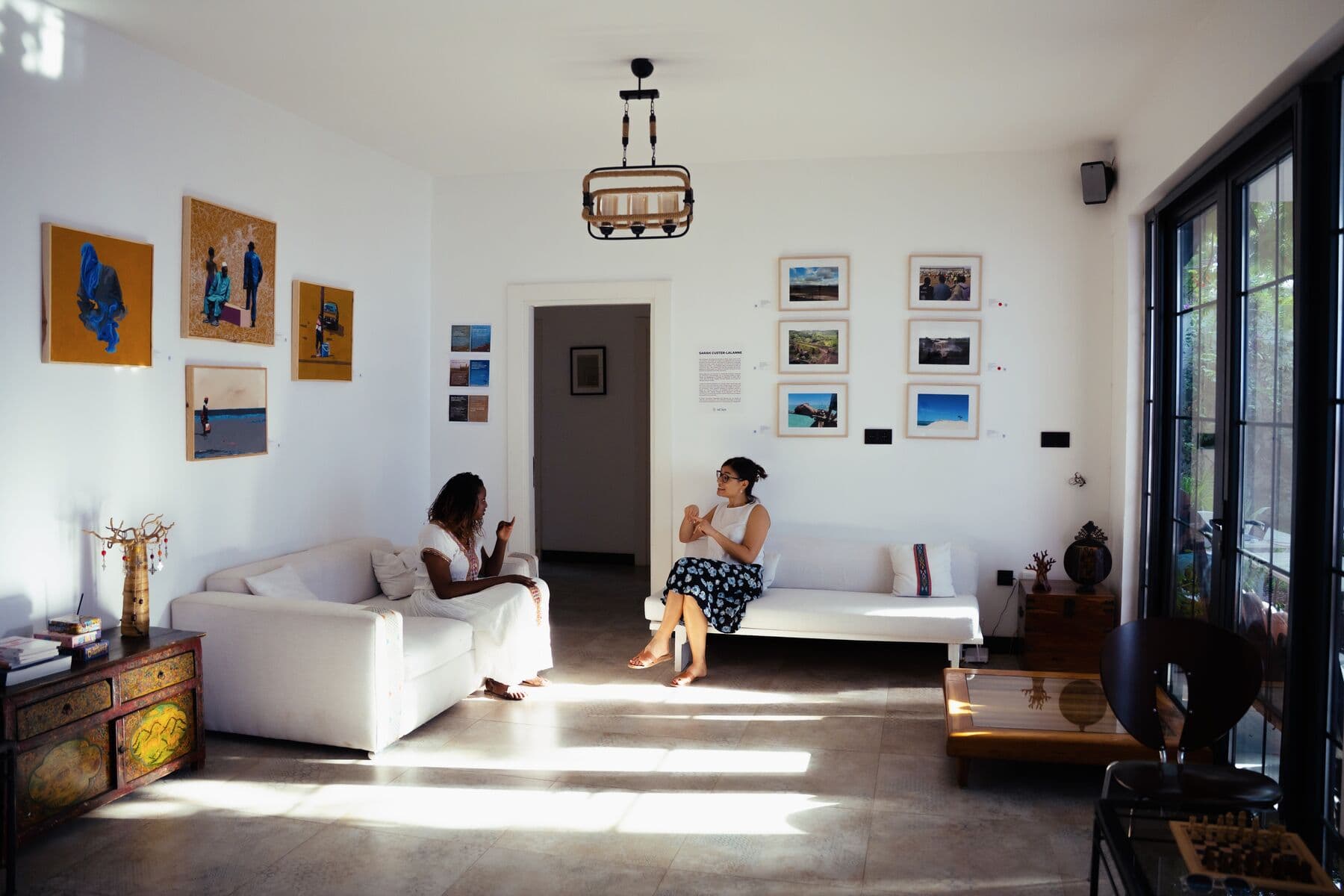
A corporate art collection in Senegal works best as an ongoing project rather than a one-off purchase: a written acquisition policy, a few living artists followed across several pieces, and full documentation for every item (certificate, invoice, inventory). At Ge'eza, in Point E, the works by Ibou Diagne, Saadio and Tampidaro, shown in the Lien commun hang, lend themselves well to this approach, with each price given on request from the artwork's page.
A collection, not a single purchase
Decorating one office with a single painting, as covered in the guide on art for the office in Dakar, answers a one-time need. Building a corporate collection goes further: it means following one or more artists over several years, acquiring pieces gradually, and documenting each purchase the same way. A company that regularly hosts clients, partners or delegations gains a consistent visual identity, piece by piece, rather than a set of unrelated choices.
Writing an acquisition policy
Before the first purchase, a simple policy avoids decisions made under time pressure. It can cover a handful of points: who decides, how often purchases are considered, what kind of work suits which space (reception, meeting room, individual offices), and how each acquisition is logged. There is no need to fix a detailed budget in advance: each price is discussed piece by piece, directly with the gallery.
Choosing living artists and following them
A collection makes sense once it is built around a few artists followed over time, rather than unrelated single pieces. Ge'eza's new gallery currently shows works by Ibou Diagne, Saadio and Tampidaro, brought together in the Lien commun hang: twenty-two canvases by Ibou Diagne, thirty mixed-media pieces by Saadio (acrylic and Posca, on canvas or kraft paper), twenty-two mixed acrylic works by Tampidaro. A company can choose to follow a single one of these artists across several formats and years, or mix all three for variety: market scenes from Ibou Diagne, dense graphic signs and figures from Saadio, urban Dakar from Tampidaro.
Documenting every acquisition
Every work sold by Ge'eza leaves with a certificate of authenticity signed by the artist, the reference document for any corporate collection, useful for insurance, resale or simply a move to new premises. The guide on the certificate of authenticity covers what it should contain. For a collection, it helps to keep a simple internal inventory too: exact title, artist, technique, dimensions, year, purchase date and method, and location within the premises. Kept up to date by a single person, this list prevents gaps when staff change.
Matching the format to each space
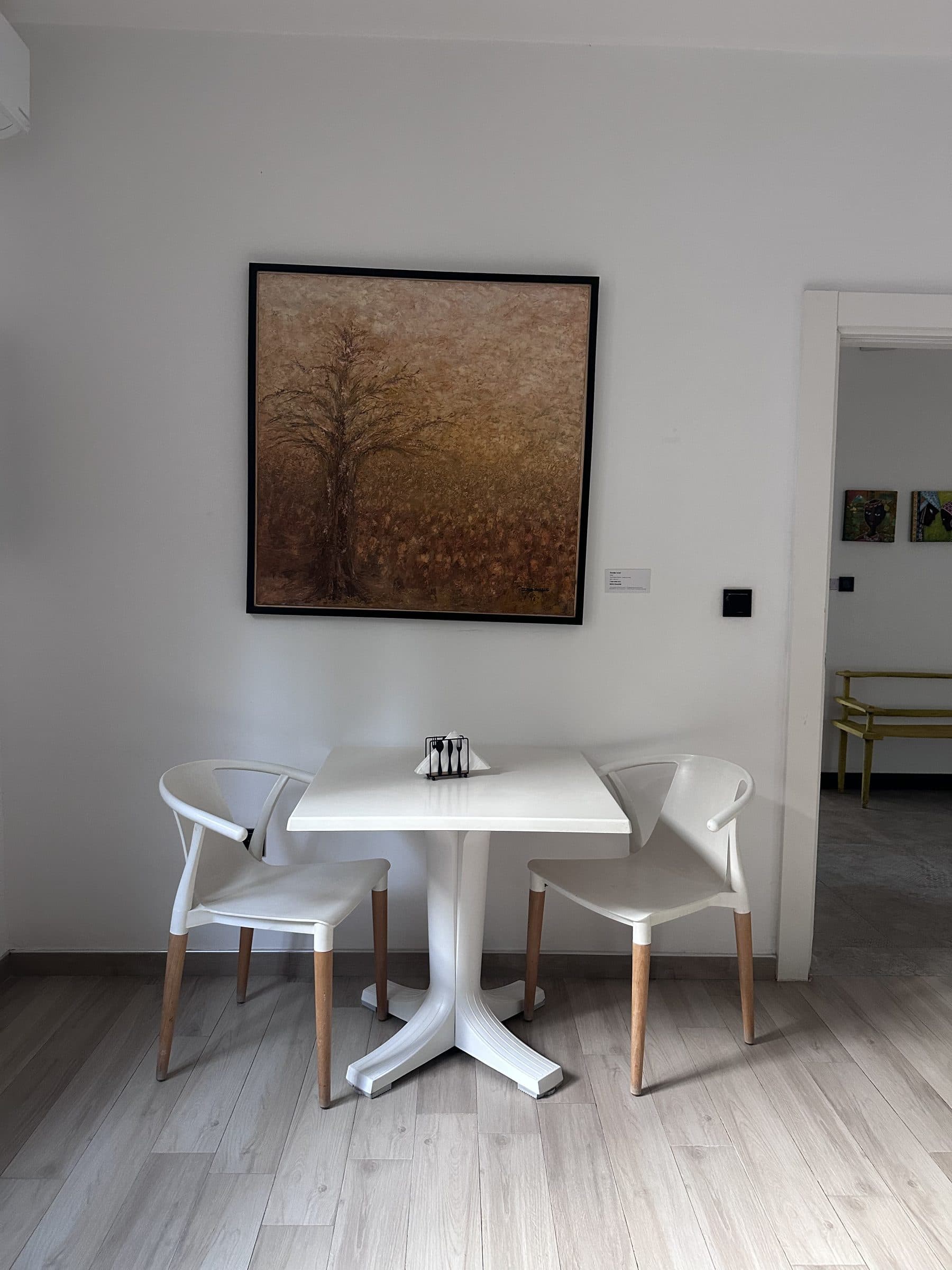
A reception area usually suits a large format, visible from the entrance, while a meeting room benefits from a piece that stays pleasant to look at through long meetings, without pulling attention away from the discussion. Individual offices work well with smaller formats. Light matters as much as size: a wall exposed to direct sun will damage a painting over time, whether it is an oil or an acrylic.
Bringing the team into the choice
A corporate collection works better when it is not just one person's decision. Involving a handful of colleagues in choosing a piece, during a visit to the gallery for instance, builds a stronger attachment to the work once it is hung, and keeps it from feeling like decoration imposed from above. A group visit pairs easily with a shared lunch or coffee at the gallery, so choosing a piece stays an enjoyable moment rather than another item on an admin checklist.
A collection that travels with the company
A company sometimes moves offices, grows, or opens a second site: a well-documented collection travels easily from one place to another, provided the certificates, invoices and inventory have been kept up to date. For a growing company, it helps to review that inventory once a year, confirm that each piece is still insured at its purchase value, and use the moment to consider a new acquisition if a wall in the new premises stays bare. That yearly review is also a good time to check whether older pieces in the collection need cleaning or reframing, especially ones that have hung under the same lighting for several years.
How to proceed at Ge'eza
The process is the same as for an individual purchase: browse the gallery online or in person, shortlist the works that fit the project, then ask for the price of each from its page. The team replies on WhatsApp at +221 78 660 07 07 or by email at geezacultures@gmail.com, with the details and the certificate. For a first conversation or a purchase planned over several months, it is also possible to visit the gallery directly, open during restaurant hours, Tuesday to Sunday, 8am to 10pm.
Frequently asked questions
How many pieces does it take to call something a corporate collection?
There is no fixed number: a few pieces followed over time and documented consistently are enough to call it a collection rather than a single purchase.
Does a budget need to be set in advance?
No, each price is discussed piece by piece from its page; no price list is published online for now.
Do works bought for a company come with a certificate?
Yes, every work sold by Ge'eza leaves with a certificate of authenticity signed by the artist.
Can a company follow a single artist over several years?
Yes, that is a common approach: following Ibou Diagne, Saadio or Tampidaro across several formats helps build visual consistency across a company's premises.
How do you ask for a price on several works at once?
By writing on WhatsApp at +221 78 660 07 07 or to geezacultures@gmail.com, naming the titles found on each artwork's page.