
Question · 2 November 2026
Amharic Words for the Table at Ge'eza
A handful of Amharic words worth knowing at an Ethiopian table: selam, ameseginalehu, bunna, injera, wot, tibs, gursha, birz, tej. What each one means, and why Ge'eza is said to mean house in Geez.
A handful of Amharic words go a long way at the table: selam to greet, ameseginalehu to say thank you, bunna for coffee, and the already familiar injera, wot, tibs, gursha, birz and tej. None of them is needed to order at Ge'eza, but they add a layer to the meal, and the team is always happy to hear them tried.
Greeting and thanking
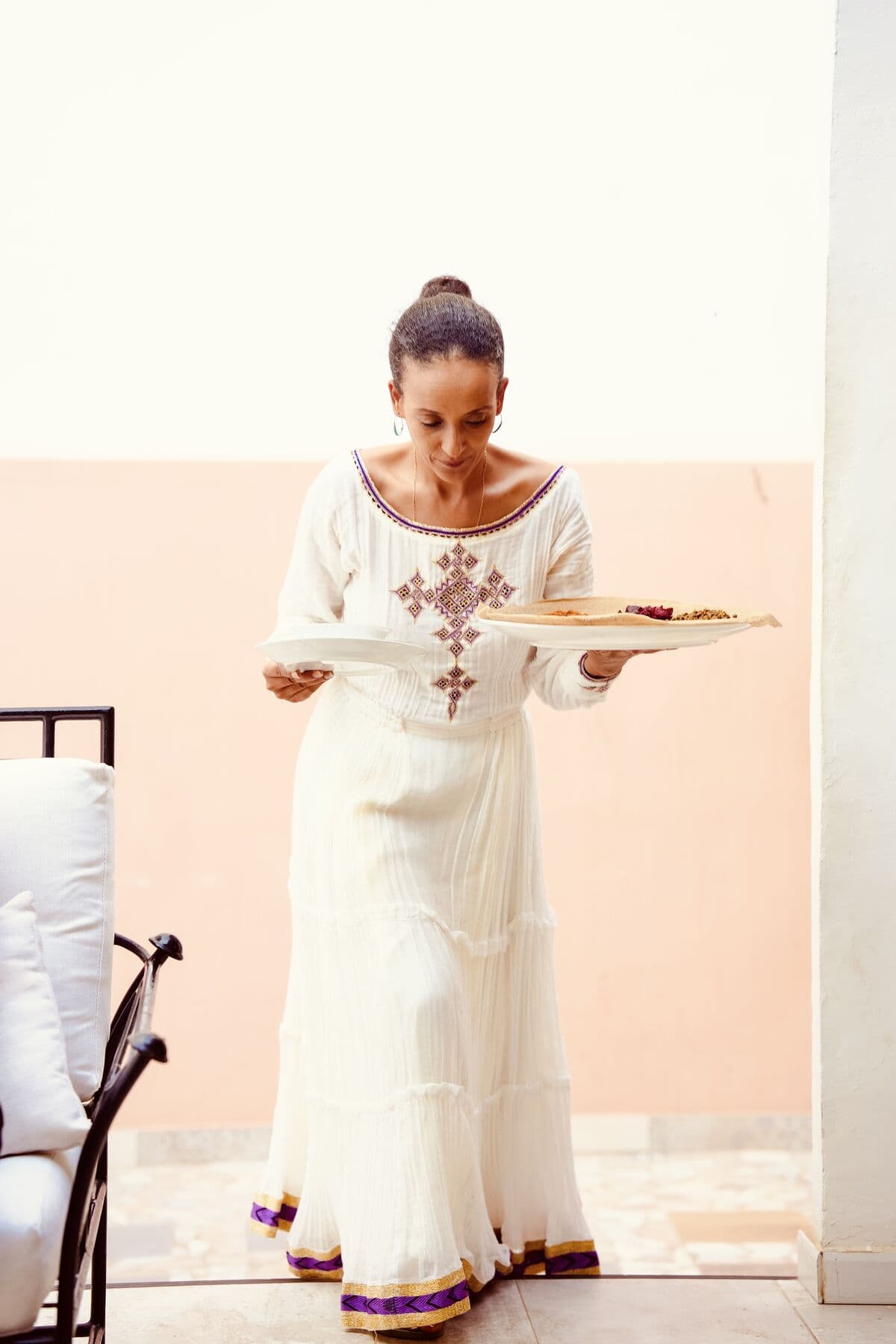
Selam is a simple greeting, close to a warm hello. It works walking into the house, to the team or to fellow guests. Ameseginalehu means thank you: a longer word that takes a bit of practice, but one that always gets a smile when attempted on the way out.
The words already on the menu
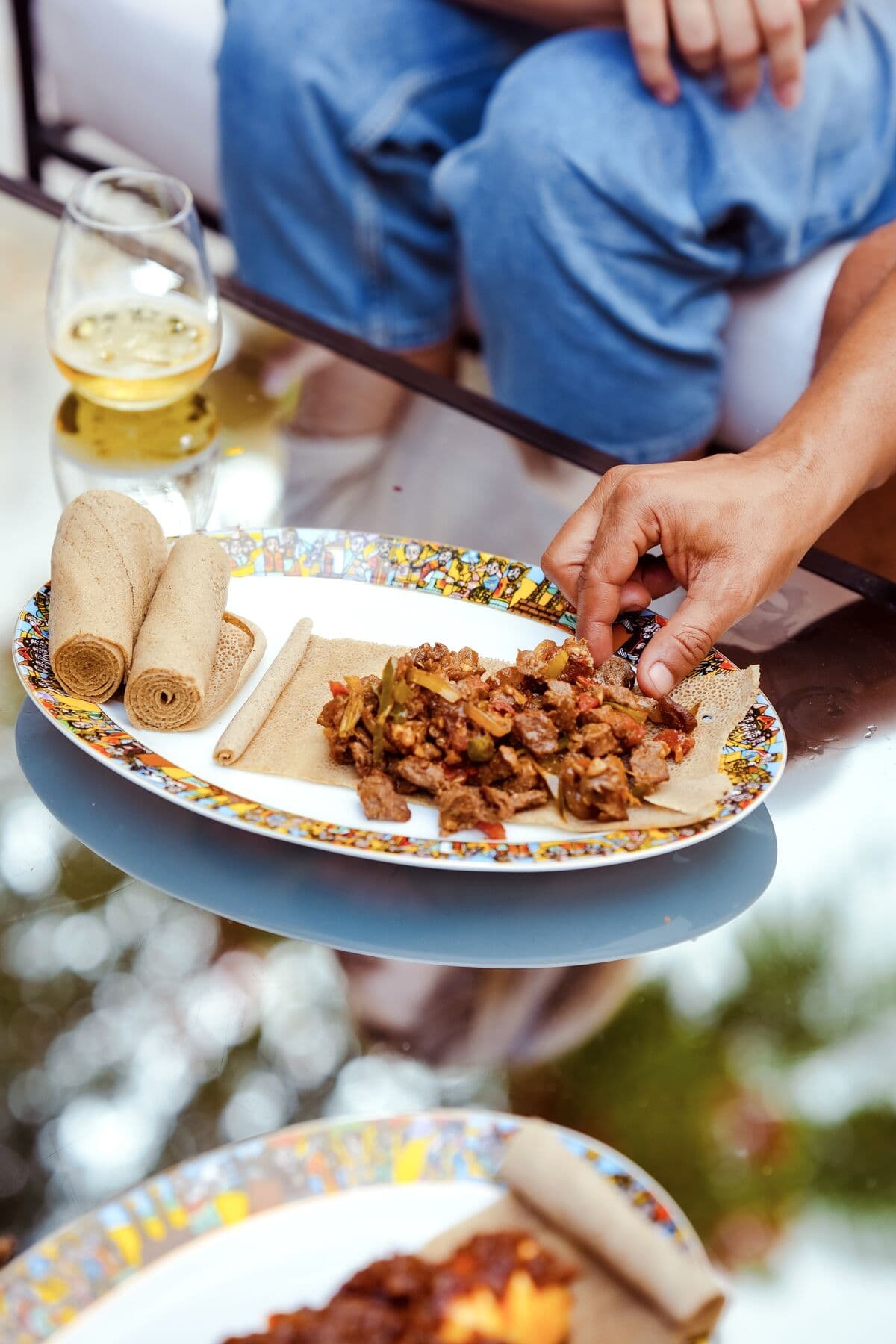
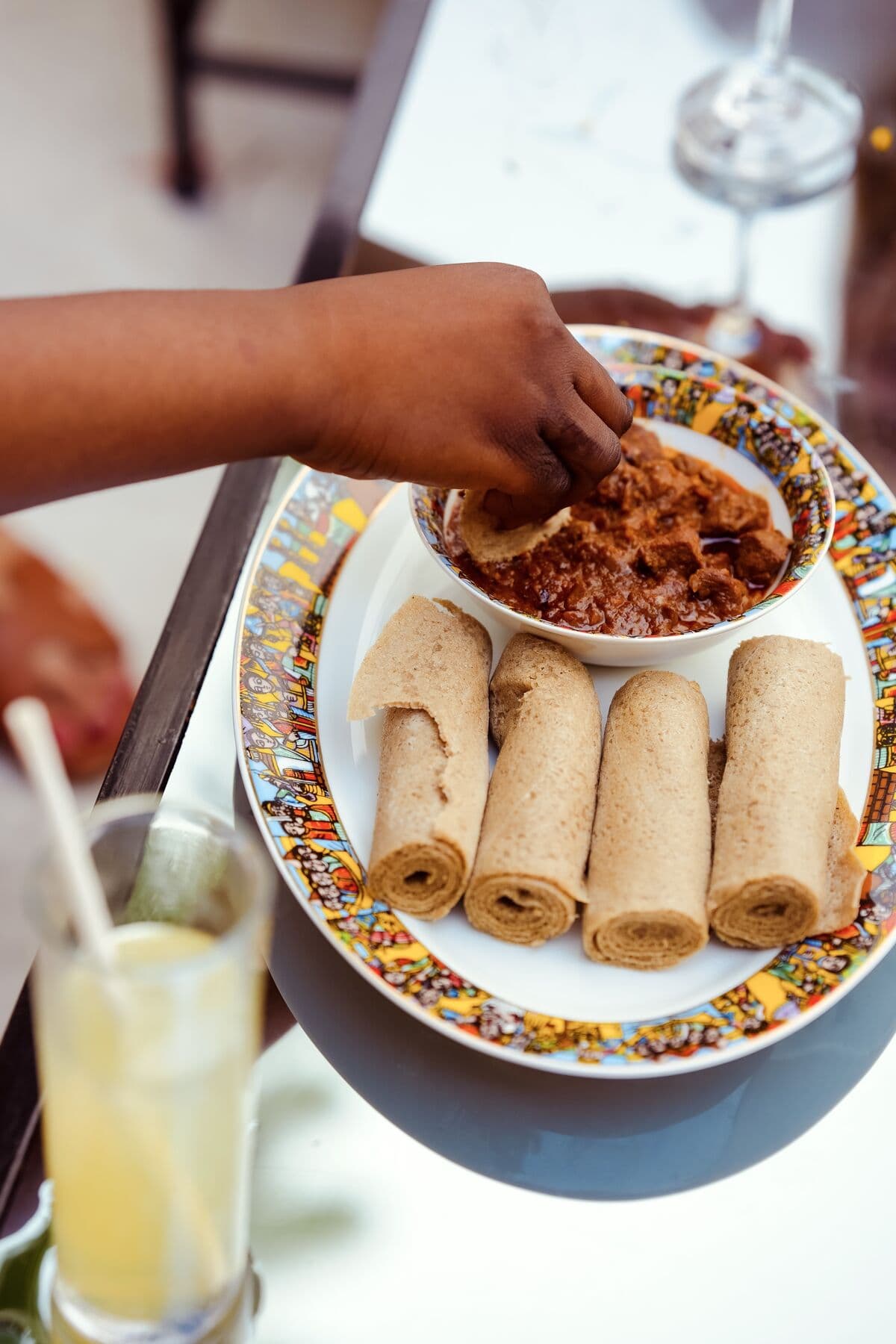
Several Amharic words already sit on Ge'eza's menu, with no translation needed to order them. Injera names the fermented bread that works as plate and fork for the whole meal, covered in injera explained. Wot means stew, naming the family of slow-cooked dishes such as doro wot or misir wot. Tibs names meat sauteed over high heat. Dish names also appear in Ethiopian script on the menu, the Geez writing explained in the Geez script.
Bunna, coffee and its ritual
Bunna is the Amharic word for coffee. In Ethiopia, it names both the bean and the coffee ceremony as a whole: being invited for bunna often means being invited to the full ritual, not just a cup. What does bunna mean goes further into this double meaning, useful for understanding what is on offer when the team suggests a ceremony rather than a simple coffee.
Birz and tej, the honey drinks
Birz and tej are the menu's two honey drinks. Tej is alcoholic, the traditional honey wine; birz is its alcohol-free cousin, honey water. The two words tend to come up together in conversation, since they describe the same base prepared two different ways.
Gursha, the gesture that goes with the meal
Gursha is not just a word, it is a gesture: placing a mouthful directly in the mouth of someone you care for. The word and the gesture are inseparable at the Ethiopian table. Gursha: eating with your hands explains how to offer one and how to receive one without awkwardness.
Why the house is called Ge'eza
The name Ge'eza echoes, in its spelling, Geez, Ethiopia's historic language and script: the house presents it as meaning house in Geez. It is a quiet way of carrying the culture into the name of the place itself, before it even reaches the words on the menu.
Using them at Point E
None of these words is required to order: the team answers in French and in English, and pointing at the menu is enough. But trying a selam on arrival or an ameseginalehu on the way out is always well received. To book a table or ask a question before coming, write on WhatsApp at +221 78 660 07 07.
Frequently asked questions
Do I need to speak Amharic to order at Ge'eza?
No, the team answers in French and English. These few words are a bonus, not a requirement.
What does bunna mean?
It is the Amharic word for coffee, which, depending on context, can also mean the coffee ceremony as a whole.
Is gursha a word or a gesture?
Both: it is the name of the mouthful and the act of placing it in someone else's mouth.
Why is the house called Ge'eza?
The name echoes Geez, Ethiopia's historic language and script, and is said to mean house in that language.