
Dakar · 9 November 2026
Kermel Market in Dakar: The Plateau Hall, Fruit and Flowers
Kermel market, a covered hall in Dakar's Plateau district, built in the early twentieth century and rebuilt after a fire in the 1990s: fruit, flowers, fish and craft around it. Prices are negotiated on the spot. Pair it with the Théodore Monod museum.
Kermel market is a covered hall in Dakar's Plateau district, built in the early twentieth century and rebuilt after a fire in the 1990s. Inside, you will find fruit, flowers and fish, while craft sellers tend to gather around the hall, in the streets nearby. Morning is the best time to go, when the stock is at its freshest, and bargaining is expected, with prices settled on the spot. The visit pairs well with the Théodore Monod museum, before heading to Point E for lunch.
A hall from the early twentieth century
Kermel market occupies a recognisable building, a covered hall put up in the early twentieth century to house the Plateau's fresh produce trade. A fire in the 1990s damaged the structure, which was later rebuilt while keeping the spirit of the original building. It remains one of the district's landmarks today, drawing both residents doing their shopping and visitors curious about its architecture.
What's inside the hall
Inside, the stalls focus on fresh produce: seasonal fruit, vegetables, cut flowers and fish brought in each morning. The mood is busy, especially early in the day, with aisles that can feel tight between the stalls. It is a good place to see local produce and get a sense of what makes up Dakar's markets, away from organised tourist routes.
Craft around the hall
Around the hall itself, in the surrounding streets, craft sellers gather: wooden objects, fabric, jewellery and assorted souvenirs. It is a natural extension of a market visit for anyone keen to pair fresh produce with a bit of souvenir hunting. As elsewhere in Dakar, bargaining is part of the experience, with no price fixed in advance.
The best time to visit
Morning remains the most rewarding time to see Kermel market, when the stalls are full and the stock is freshest. Activity continues through the day, but supplies of certain items, especially fish, can thin out. Specific hours vary by day: check locally or with a local guide before planning your visit around a fixed time.
Pairing it with the Théodore Monod museum
The Plateau brings together several points of interest close to one another, including the Théodore Monod museum, dedicated to African art and culture within IFAN. Our article on the Théodore Monod museum covers its collections and tips for a good visit. Combining both stops in the same morning gives a good sense of the Plateau, spanning architectural heritage, art and market life.
Then lunch at Point E
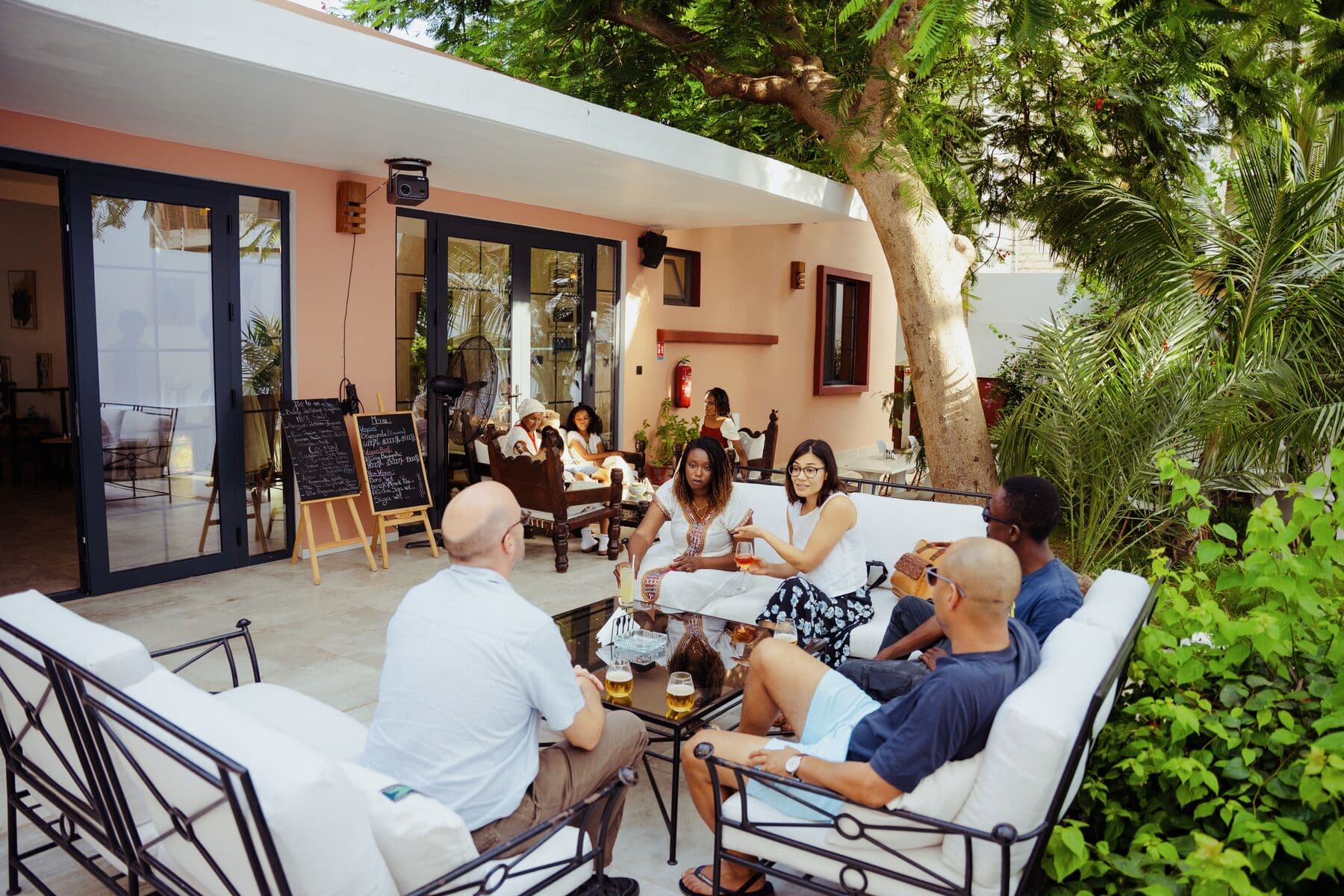
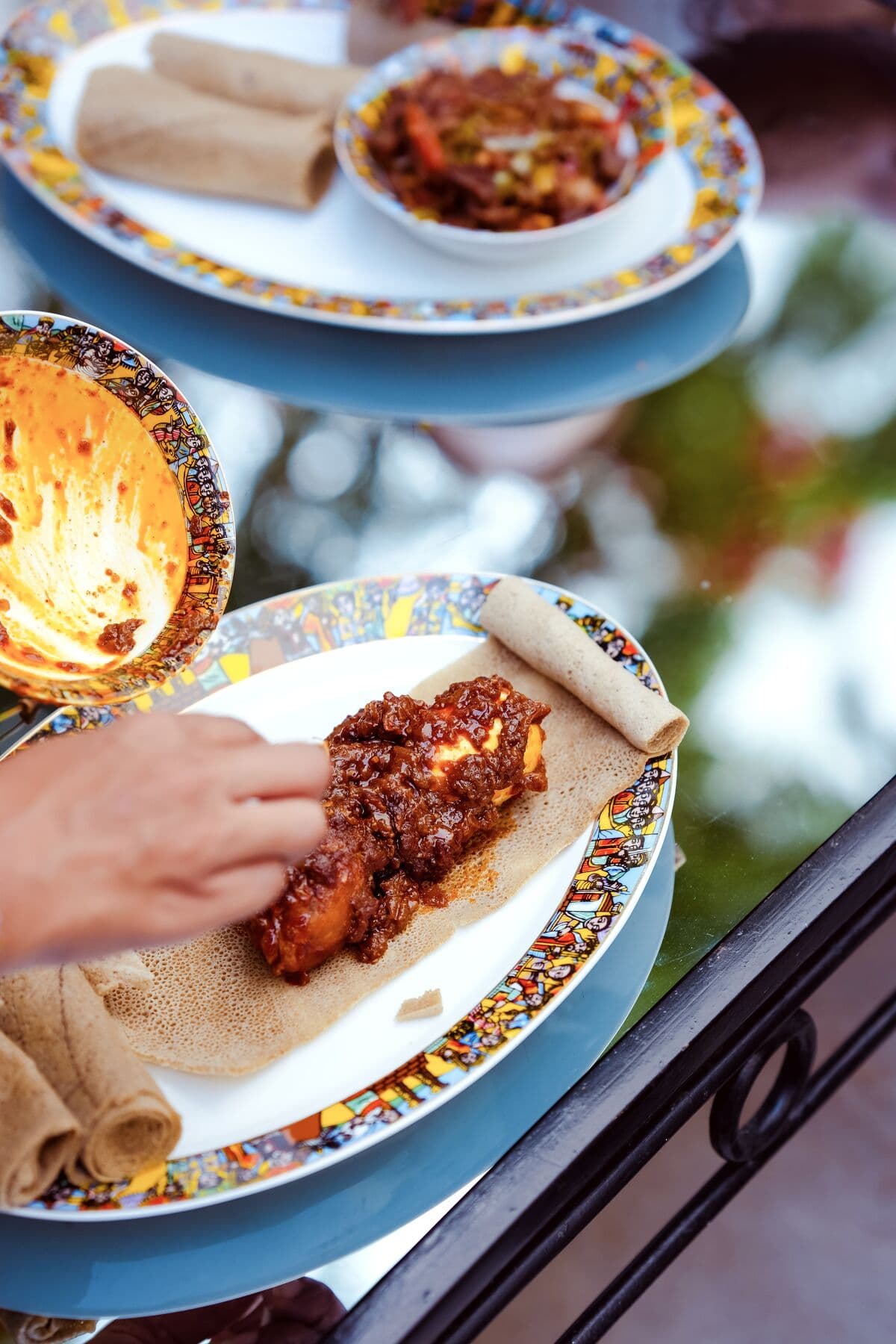
After a morning spent between Kermel market and the Théodore Monod museum, Point E is a simple option for lunch. At Ge'eza, the Senegalese dish of the day is served Tuesday to Friday at lunch, at 5,500 F with water or local juice and attaya, and changes by the day: mafe on Tuesday, thieboudienne on Wednesday, supou kanja on Thursday, chicken yassa on Friday. For lunch on any other day of the week, the Ethiopian menu, with its vegan fasting dishes and meat dishes, remains available all week except Monday.
Bargaining at the market
As at most markets in Dakar, bargaining is customary at Kermel, especially for the craft sold around the hall. Prices for fresh produce inside tend to be more fixed, though it is still possible to discuss a price for a larger quantity. Stay courteous and take your time: it is also a good way to talk with sellers about where their produce comes from.
A route through the Plateau
Kermel market is one stop among many in a Plateau rich with options: historic buildings, institutions and places to eat. For a fuller visiting plan in Dakar, our guide to 48 hours in Dakar sets out an itinerary for visitors passing through, in which the Plateau and its markets naturally find a place.
Before you go
Bring some cash for small purchases, keep your belongings close in the market's density, and avoid the hottest hours of the day if you want a more comfortable visit. A morning is usually enough to take in the hall and its surroundings before moving on to the rest of the day's plans.
For photographers
The hall itself and the bustle of the stalls make for interesting scenes, provided you ask politely before photographing a seller up close. A market is first and foremost a place of work, and that small courtesy makes a real difference to the quality of the exchange with the people you meet there.
Visiting with children
Kermel market can also work as a stop with children, as long as you keep a close eye on them in the busier aisles. The colours of the flowers and the fruit stalls tend to hold a child's attention more easily than the fish section, which can be crowded and slippery underfoot.
Frequently asked questions
When was Kermel market built?
In the early twentieth century; the hall was later rebuilt after a fire in the 1990s.
What can you find at Kermel market?
Fruit, flowers and fish inside the hall, and craft in the streets around it.
What's the best time to visit the market?
Morning, when the fresh produce is at its most complete.
Can the visit be paired with the Théodore Monod museum?
Yes, both are in the Plateau district and work well together in the same morning.
Where to have lunch after visiting the Plateau?
At Point E, at Ge'eza, with a Senegalese dish of the day at 5,500 F from Tuesday to Friday at lunch.