
Dakar · 9 November 2026
HLM Fabric Market in Dakar: Buying Cloth and Getting It Sewn
The HLM market, Dakar's go to address for wax print, bazin and embroidery, brings together fabric sellers and tailors. Buy by the metre, get it sewn, negotiate the price: rates are discussed on the spot. Compare with the textiles at Ge'eza.
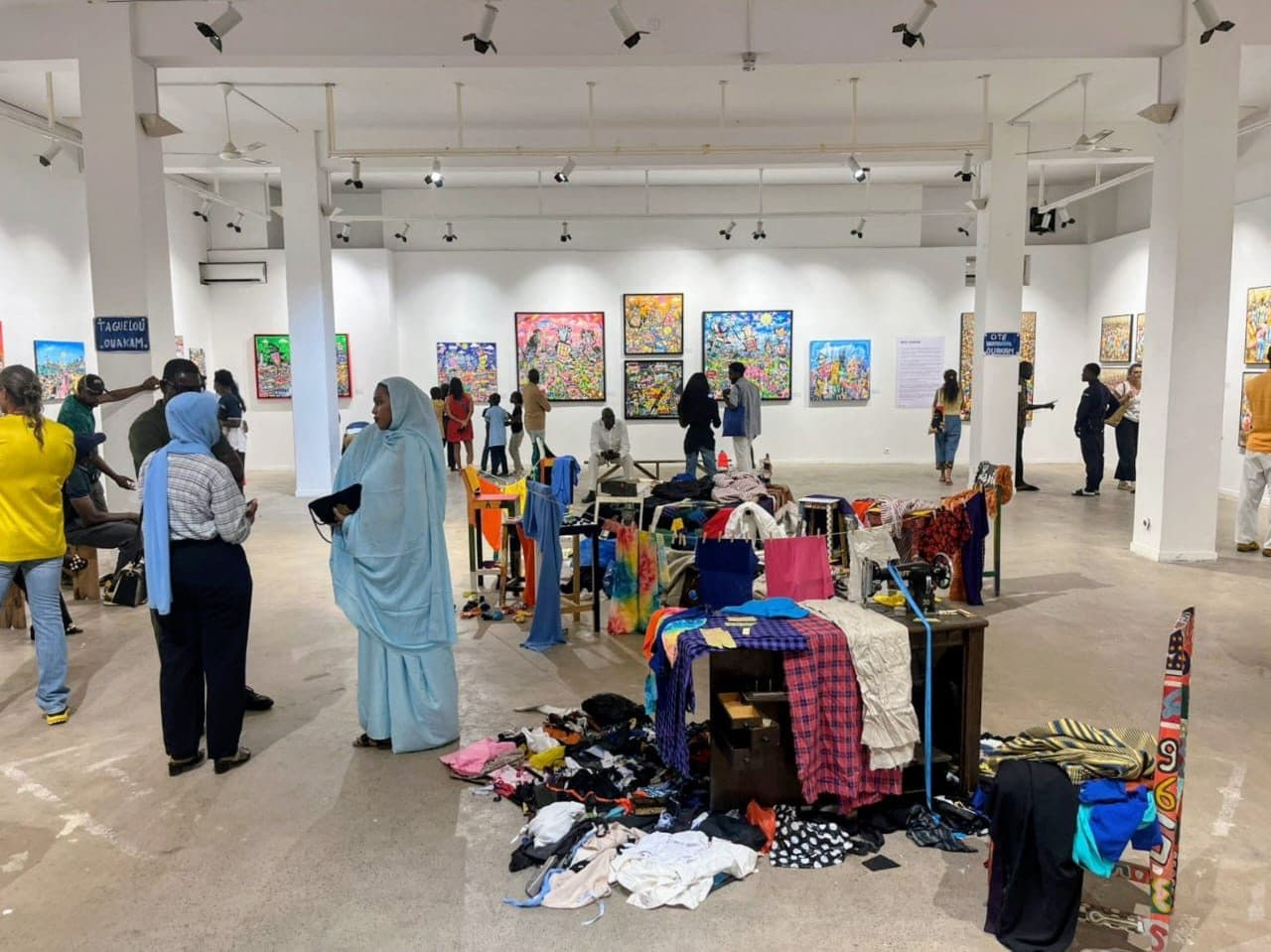
The HLM market in Dakar is a well known address for buying fabric: wax print, bazin and embroidered cloth are sold in bulk, measured out by the metre by dozens of sellers set up side by side. Around the market, tailors offer made to measure sewing. The cost of both the fabric and the tailoring is negotiated on the spot and varies from one seller to the next. Allow time for the sewing, and compare with the textiles on display at Ge'eza's gallery or available at its concept store, also without listed prices.
A market built around fabric
The HLM market has built its reputation squarely around cloth, to the point of being the reference address in Dakar for wax print, the boldly patterned fabric widely worn across West Africa, and bazin, a stiffer, glossier cloth often kept for special occasions. Stall after stall offers its own range of patterns and qualities, which takes a bit of time to work through before you settle on what suits you.
Buying by the metre
Fabric is sold by the metre, and how much you need depends on the outfit you have in mind: a full outfit generally needs more cloth than a single accessory. Talk to the seller about the quantity they would recommend for the piece you are planning, showing a photo or a sample if you have one. A good fabric seller knows the usual requirements for the most common styles and can guide you.
Getting a piece made to measure
Around the market, many tailors offer made to measure sewing, starting from the fabric you have just bought. This step takes time: a made to measure garment is never ready in a few minutes, and you should plan either to come back or to have the finished piece delivered. Agree clearly on the timeline with the tailor before handing over your fabric, and keep in mind that a shorter promised deadline is not always kept.
Negotiating politely
Both the price of the fabric and of the tailoring are open to negotiation, as is customary locally. Take time to compare a few sellers before committing, ask about the quality and origin of the fabric, and accept that negotiating takes a little time. Courtesy remains the best approach: a tense exchange rarely gets a better price, and it spoils the moment besides.
Fabric, and a link to Ge'eza's gallery
African textiles sit within a visual culture that also shows up at Ge'eza's gallery, which exhibits African textiles of its own, while the concept store sells handmade craft. Pattern, colour and material carry meaning across West African visual culture, in cloth just as much as in painting or sculpture, and noticing that overlap can sharpen the way you look at both. A visit to the gallery after a trip to the market makes for an interesting contrast between textile craft and contemporary art, two ways of working with colour and form that rarely get compared directly.
The concept store, another option
For anyone who prefers a quicker purchase, without negotiating or waiting for tailoring, Ge'eza's concept store offers handmade craft and design, sold on site during restaurant hours, Tuesday to Sunday, 8am to 10pm. No prices are displayed there either, but the shopping experience is different: calmer, without the density of a large market like HLM.
Fabric as a gift idea
A length of fabric or a made to measure piece makes a memorable gift, provided you know something of the recipient's taste. For more gift ideas in Dakar, our article on gift ideas in Dakar widens the choice to fine grocery, craft and artworks.
Rounding out a souvenir list
Beyond fabric, Dakar offers other souvenir ideas: spices, coffee, craft, artworks. Our article on souvenirs to bring back from Dakar gives a broader overview, useful for anyone combining a trip to the HLM market with other purchases elsewhere in the city.
Before you go
Allow time: making the most of the HLM market means moving between stalls, comparing and negotiating, which takes longer than a purchase in an ordinary shop. Keep cash on hand, since card payment is not guaranteed everywhere, and stay mindful of your belongings in a dense, busy space.
Visiting more than once
There is no need to decide everything in a single morning. Many shoppers return a second time after comparing prices elsewhere, before actually placing an order with a tailor. It helps to note the name or the stall of a seller you liked, so you can find them again easily on a later visit, rather than searching through the whole market from scratch.
Frequently asked questions
What does the HLM market mainly sell?
Fabric: wax print, bazin and embroidered cloth, sold by the metre by many sellers, along with tailoring services nearby.
Can you get a garment sewn on the spot?
Many tailors work around the market, but sewing takes time: agree clearly on the timeline before handing over your fabric.
Should you negotiate at the HLM market?
Yes, both the fabric price and the tailoring cost are negotiable: compare a few sellers before committing.
Are the textiles at Soumbédioune and the HLM market the same?
No, Soumbédioune leans more toward craft objects, while the HLM market specialises in fabric by the metre and tailoring.
Is fabric sold at Ge'eza?
The concept store offers craft and design, with no prices displayed, but the range and the mood are different from a market like HLM.