
Guide · 22 October 2026
Embassy Cultural Programme in Dakar: Showcasing a Country
For an embassy or cultural service in Dakar: present artists from your country on the Un pays à l'honneur model, exhibition, brunch and music, with a quote within 24 business hours. Distinct from a simple reception.
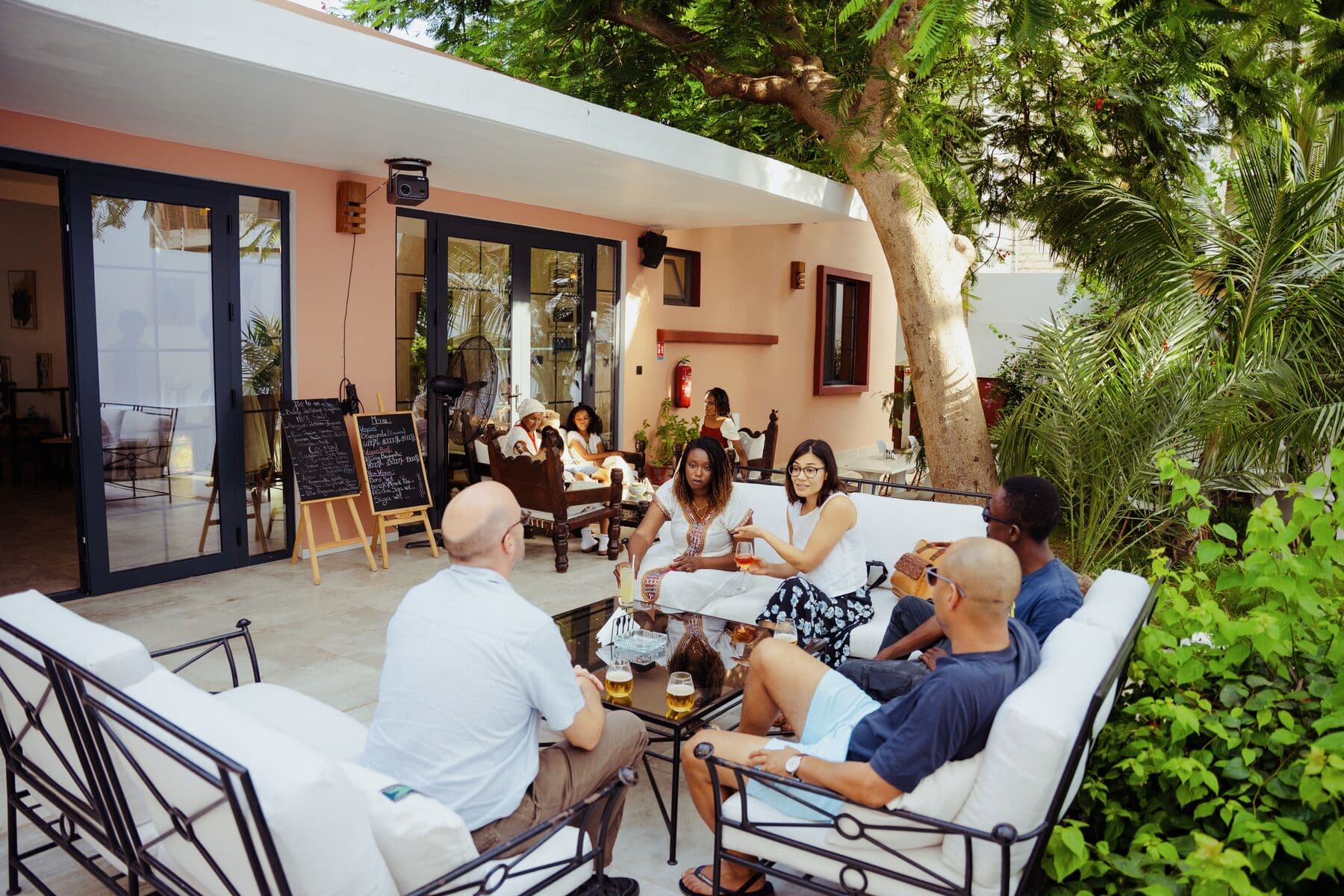
For an embassy or a cultural service that wants to showcase artists from its own country in Dakar, one format already exists and has been tested: "Un pays à l'honneur," which put Cape Verde and then Sudan in the spotlight at Ge'eza, combining an exhibition, an opening, a music brunch and a small craft market over several days. This format differs from a simple diplomatic reception: it gives artists from the featured country a central place, over a longer stretch of time than a single evening.
A format built to showcase a country
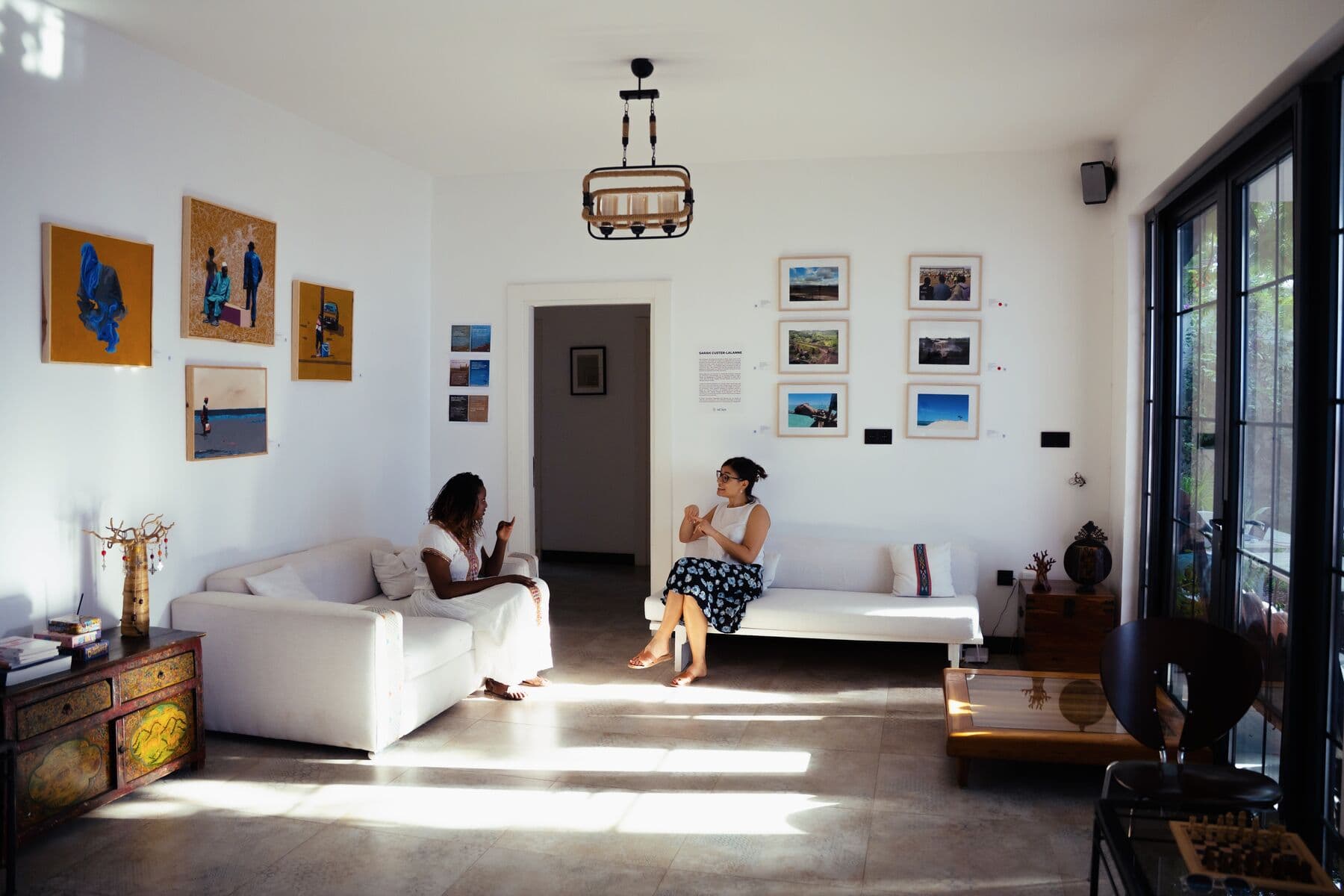
Rather than a single reception evening, "Un pays à l'honneur" spreads the presentation of a culture across several days: a hang of work by artists from the invited country in the gallery, an opening evening, then a highlight bringing together a brunch, live music and a small market of makers. The edition devoted to Cape Verde showed work by a visual artist of Cape Verdean origin, with an opening followed by a DJ set, then a brunch and a craft market a few days later. The edition devoted to Sudan showed work by two artists, with a music brunch as its highlight.
What an embassy brings, what the venue brings
In a project like this, the embassy or cultural service usually identifies the artists to present, handles communication with its community and contacts, and can invite guests of its choosing. The venue, for its part, provides the gallery, the reception space, the kitchen and the on site team. Neither side funds the other's project: each brings what it does well, with no question of a grant or an institutional partnership between the embassy and the venue.
How this differs from a reception
An embassy reception in Dakar is usually built around a single evening, with catering, a reception format and sometimes entertainment. A cultural programme on the "Un pays à l'honneur" model goes further: it gives real space to artworks shown over several days, to an audience that comes specifically to see them, not only for one evening of representation. The two formats can also be combined, a reception marking, for instance, the opening of a longer exhibition.
Building the project with the venue
To consider a programme like this, an embassy or cultural service usually describes: the artists it wants to present, the number of works envisaged, how long the exhibition should run, and whether it is picturing a brunch, a concert or a market alongside it. The venue replies with space availability and a quote, generally within 24 business hours, with no capacity or pricing published in advance.
Who handles communication, who handles logistics
In an embassy cultural programme, the division of roles usually becomes clear early in the conversation. The embassy generally communicates with its own community, its diplomatic contacts and sometimes the press from its own country, while the host venue handles logistics on site: hanging the works, welcoming guests, running the brunch or the opening. For a smaller diplomatic mission without a large team, this split considerably lightens the organising load, since the venue already knows its own spaces and how it runs.
Planning ahead for shipping the artworks
When an embassy wants to show work brought from its own country rather than pieces by artists already based in Dakar, shipping and clearing the pieces through customs needs particular lead time, arranged with the relevant authorities and a specialist carrier. The host venue can advise on available space and hanging conditions, but the international transport of the works remains the responsibility of the embassy or the institution lending them.
Programming that fits a wider ambition
Ge'eza presents itself as a bridge between two Africas, and formats such as "Un pays à l'honneur" serve that idea: bringing different African cultures into dialogue in the same place, for the length of an exhibition. It is a concrete, already tested way of living out a cultural diplomacy that goes beyond a single reception.
Thinking beyond a single edition
An embassy that tests this format once, with a smaller selection of artists, often finds it easier to plan a second, larger edition later, once it knows how the audience responds and how the venue's spaces work for its needs. Starting modestly, with a handful of pieces and a shorter exhibition window, leaves room to expand the format in future, rather than overcommitting on a first attempt.
Taking it further
An embassy or cultural service that wants to look into a programme like this can write to Ge'eza's team through the spaces page, on WhatsApp at +221 78 660 07 07, or at geezacultures@gmail.com, naming the artists under consideration and the preferred period.
Frequently asked questions
What is the Un pays à l'honneur format?
A format that showcases an African culture at Ge'eza over several days: an exhibition of artists from the invited country, an opening, then a music brunch and a small craft market. It has already featured Cape Verde and then Sudan.
How does this differ from a standard embassy reception?
A reception is usually built around a single evening. Un pays à l'honneur gives artworks shown over several days a central place, with an audience that comes specifically to see them.
Who funds a programme like this?
Neither the embassy nor the venue funds the other's project: each brings what it does well, with no grant or institutional partnership between the two.
How far in advance should a programme like this be planned?
The venue replies with a quote and space availability within 24 business hours, but preparing an exhibition and an opening takes several weeks of lead time.
Can a reception and an exhibition be combined?
Yes, a reception can, for instance, mark the opening of a longer exhibition, combining both formats.