
Dakar · 6 October 2026
Cultural Institutes in Dakar: Institut français, Goethe, More
Foreign cultural centres and institutions in Dakar (Institut français, Goethe-Institut, Senegalese centres): programmes, language classes, and where private venues like Ge'eza fit in.
Dakar has several foreign cultural centres and institutions that shape the city's cultural life, including the Institut français and the Goethe-Institut, alongside Senegalese venues such as the IFAN Théodore Monod Museum, the Museum of Black Civilisations and the Daniel Sorano National Theatre. They offer exhibitions, concerts, screenings, talks and, for some, language classes. Private venues like Ge'eza complete the landscape with looser formats. This article names only institutions whose existence is certain, and asks you to check hours and programmes directly with each.
What these centres are for
A foreign cultural centre usually has a double mission: to make the language and creative output of its country known, and to build collaborations with local artists and institutions. For a newcomer it is a valuable entry point: performances, libraries or media centres, classes and above all meetings.
In Dakar these institutions often work with Senegalese artists, which makes them crossing points and not merely national showcases. This dimension of dialogue is at the heart of what is called cultural diplomacy, which our article on cultural diplomacy in Dakar covers in more detail.
Institutions worth knowing
Here are some landmarks, grouped by type.
The Institut français in Dakar. An outpost of the French cultural network, it offers a regular programme: exhibitions, performances, screenings, talks. It is open to everyone, not only French speakers from France.
The Goethe-Institut. The German cultural centre is present in Dakar. It is known for its cultural programme and for teaching German.
Senegalese institutions. The IFAN Théodore Monod Museum of African Art, on Place Soweto in the Plateau, holds collections of art and objects from Africa. The Museum of Black Civilisations, opened in 2018, is a large museum devoted to African cultures. The Daniel Sorano National Theatre hosts shows and concerts. Our article on the Théodore Monod Museum introduces the first of these.
Creative and residency spaces. Dakar also has independent spaces, artist collectives, residency centres and associations, which form a lively scene, notably around the Dak'Art Biennale.
We do not claim an exhaustive list. For any practical detail, address, hours, fees, check each institution's own site or official channels, as such information changes.
Programmes: finding your way
Each centre publishes its own calendar. To avoid following ten of them, choose two or three that match your tastes, subscribe to their newsletters and note the major dates. Ge'eza's calendar page offers a subscribable calendar and an .ics file for the house's own dates, a useful complement to those of the institutes.
Learning a language
Several institutes offer language classes. If you are settling in Dakar, there are two tracks: French, for those who do not speak it, and Wolof, the most widely spoken language in daily life. Foreign centres teach first the language of their own country, and it is worth contacting them to learn their formats, levels and calendars. Wolof lessons tend to come from schools and private teachers, found by recommendation.
Where private venues fit
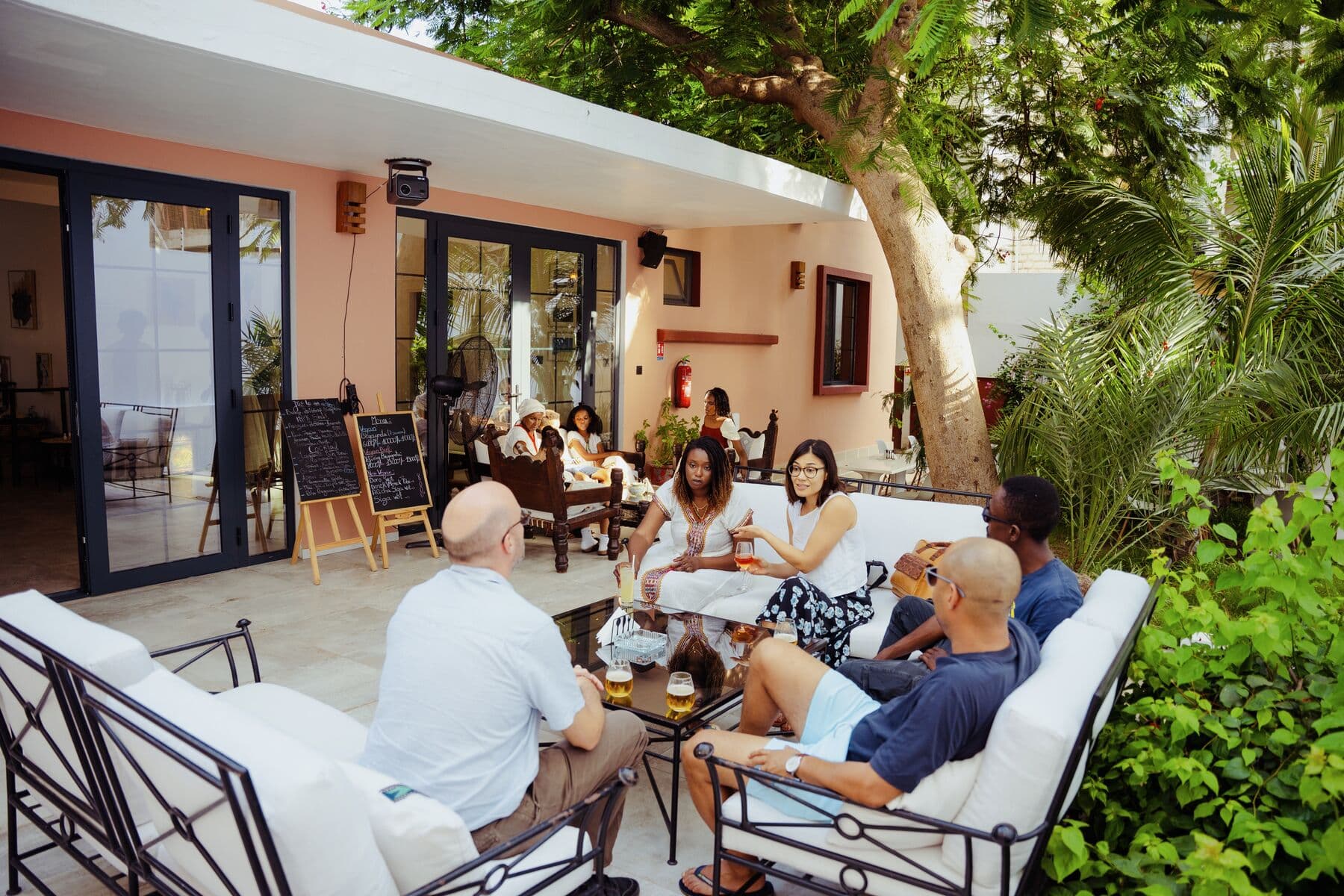
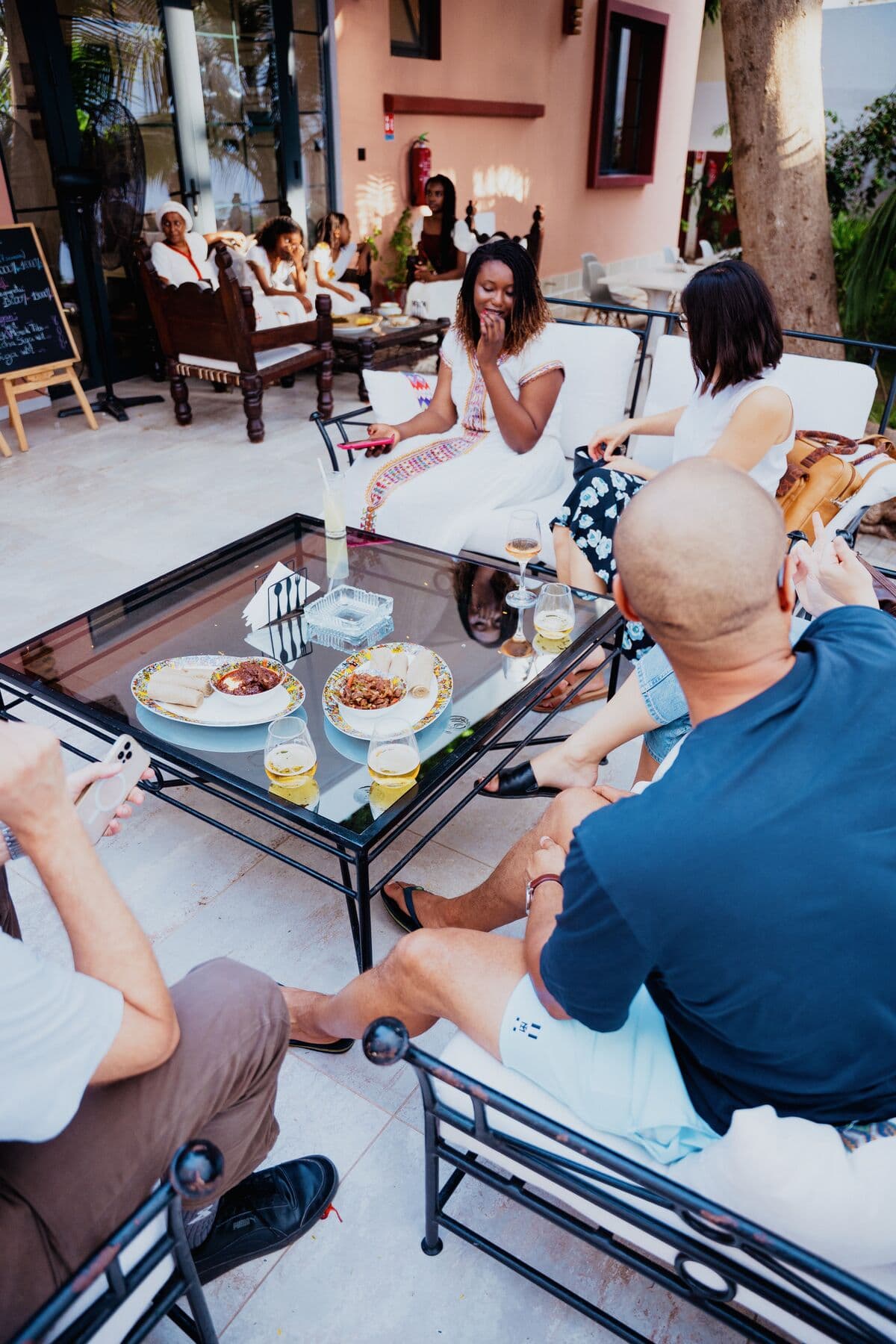
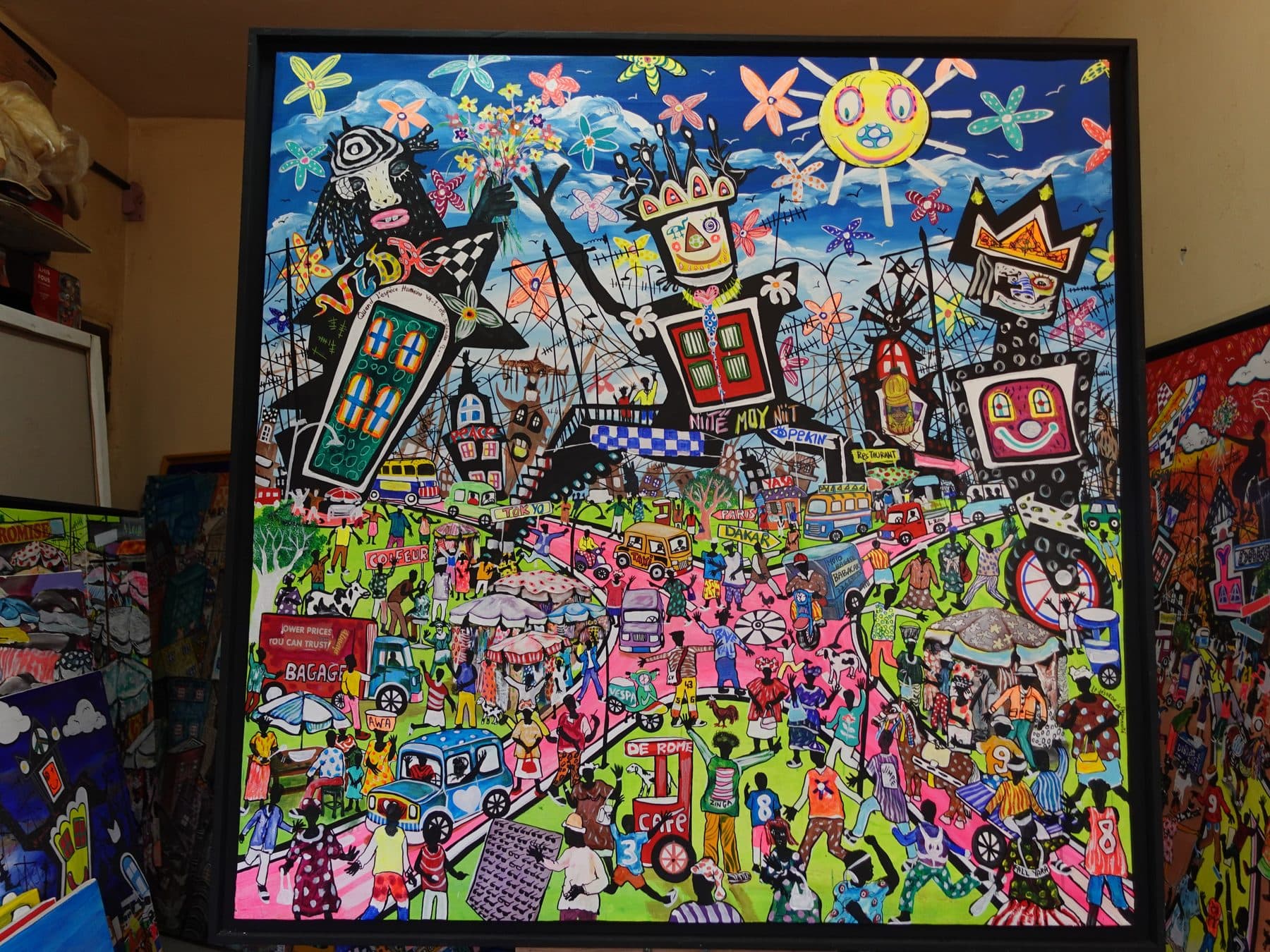
Beside the large institutions, there are private venues that do culture in a more intimate mode: galleries, restaurants with a programme, artists' houses. Ge'eza is one. It is an Ethiopian restaurant, a contemporary art gallery, a concept store and an events venue, set in a villa in Point E at 656 avenue Birago Diop.
The difference lies in scale and approach. An institute has a national mission and a large team. A private house advances on a chosen theme, with room for quick initiative. Ge'eza, which describes itself as a hub for dialogue between Ethiopian and Senegalese civilisations, presented "Lien commun" at IFAN in October 2025 with Saadio, Ibou Diagne and Tampidaro, then created editions such as "Dia Nifanena" and "A Country in the Spotlight".
The two complement each other: institutes bring continuity and institutional reach, private venues flexibility and imagination.
For whom, and for what
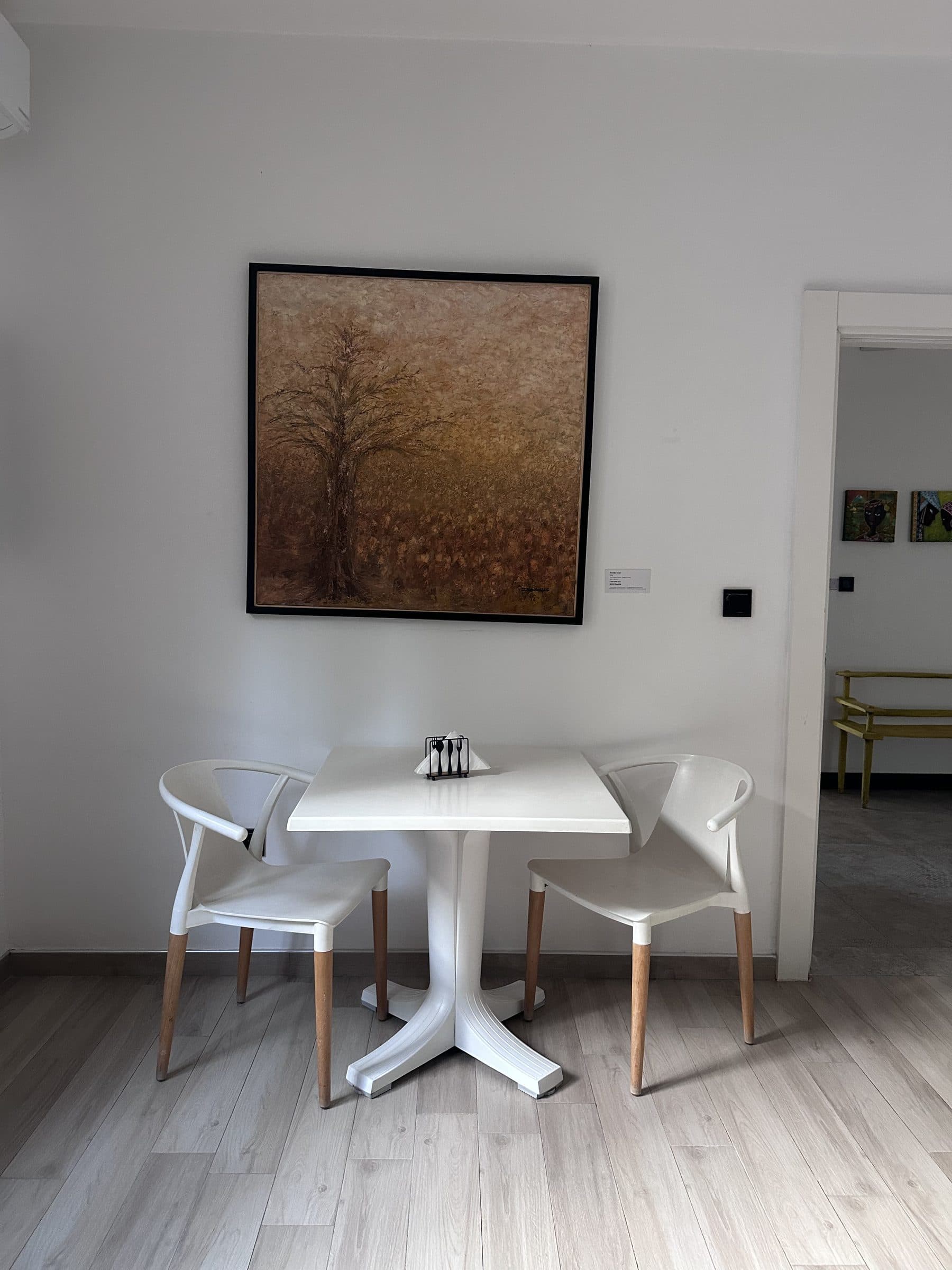
For a visiting delegation or organisation. A cultural centre can open doors and contacts. A private venue provides a setting for hosting, with a gallery salon, a glass-roofed room and a terrace, depending on need. Requests for exclusive hire and cultural team building receive a reply with a quote within 24 working hours through the spaces page.
For an expat. Institutes are good anchor points, and a place like Ge'eza lets you have lunch, a coffee and see art in the same visit.
Visiting Ge'eza
Ge'eza is open Tuesday to Sunday, 8am to 10pm, and closed on Monday. You can write on WhatsApp at +221 78 660 07 07 or by email at geezacultures@gmail.com.
A few tips for newcomers
Start with a visit that has no particular purpose: an exhibition, a concert, a screening. Note what you like, then return. Sign up to the newsletters of two or three venues, no more. And keep room for smaller places, where you are more likely to meet artists and teams.
Over a few months, patterns appear: which venues suit your taste, which have an easy atmosphere, which offer the best chance of meeting people. That map of the city is built slowly, and no guide can replace it.
Frequently asked questions
Which are the main foreign cultural centres in Dakar?
The Institut français and the Goethe-Institut are among them. Check their programmes and hours directly with them.
Can I take language classes there?
Several offer classes in their language. Ask directly about formats, levels and calendars.
Where does a place like Ge'eza fit?
As a private venue, more flexible, combining restaurant, gallery, concept store and events around the dialogue between Ethiopia and Senegal.
How do I follow Ge'eza's events?
On the calendar page of the site, with a subscribable calendar and an .ics file, or through the house's monthly letter.