
Art · 6 October 2026
Contemporary Malagasy Art: Lamba, Painting and Diaspora in Dakar
Making art in Madagascar or in the Malagasy diaspora: textile, lamba, painting and the know-how of a singular island. General background, and Dia Nifanena, Ge'eza's Malagasy day in Point E on 7 June 2026.
Malagasy art comes from a large island in the Indian Ocean whose culture, blending African and Austronesian heritage, has produced distinctive textile, sculpture and painting traditions. Contemporary creation is growing there and in the diaspora, in painting, drawing, fashion and decorative arts. On Sunday 7 June 2026, Ge'eza devoted a full day to Madagascar in Point E, "Dia Nifanena", with the artists Tefy KHT and Sarah Custer-Lalanne.
One island, several cultures
Madagascar is separated from the African continent by the Mozambique Channel. Its people descend from navigators who came from Southeast Asia, from East African communities and from other contributions over the centuries. The Malagasy language, shared across the island, shows the trace: it belongs to the Austronesian family, with many Bantu and other borrowings. This makes Madagascar a case apart, and explains why people often speak of a culture "between Africa and the Indian Ocean".
For anyone discovering Malagasy art from Dakar, that particularity is valuable. It reminds us that "Africa" is a set of very varied cultures, and that an island can offer a version very different from the Atlantic coast.
The lamba and textile arts
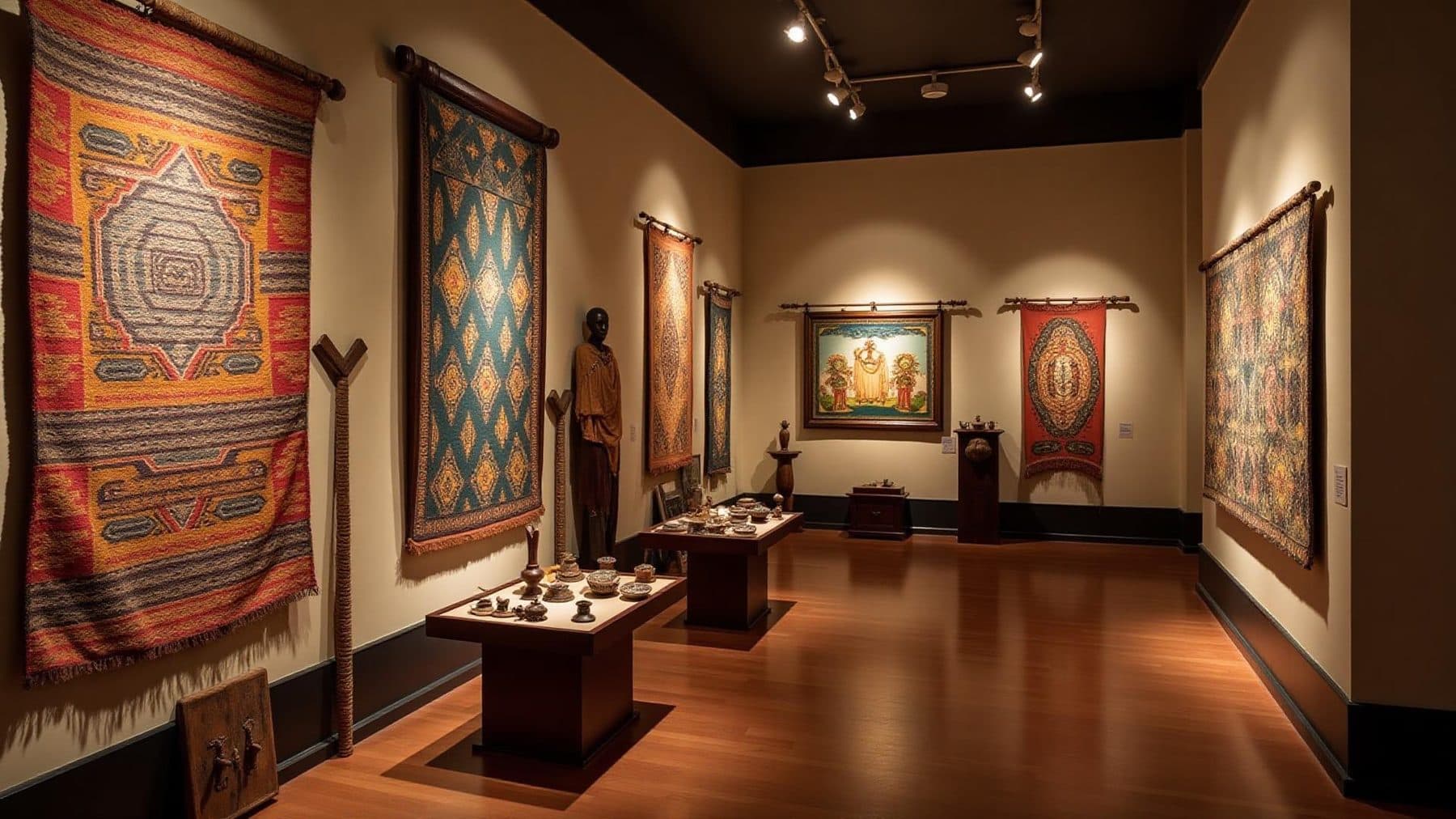
The lamba, a rectangular piece of cloth worn over the shoulders or around the body, is one of the emblems of Malagasy culture. Depending on region and occasion it is woven in cotton, silk or plant fibres, and signals belonging, a moment, a bond. Malagasy textile know-how is well regarded: weaving, embroidery, raffia, wild silk.
For today's artists, textile remains a source. Some use it as a support, others as a motif, others as a material to rethink. If you like fabrics, our article on Ethiopian textiles offers another doorway, from the Horn of Africa.
Painting and contemporary creation
Visual arts in Madagascar spread across painting, drawing, sculpture, photography and design. Part of the scene lives in Antananarivo, the capital, part in the island's other towns, and part in the diaspora, notably in France. As often with island scenes, circulation plays a big role: artists travel, exhibit elsewhere, come back.
For Tefy KHT and Sarah Custer-Lalanne, see their profile pages on the site or ask the gallery team.
Dia Nifanena, Madagascar in Point E
"Dia Nifanena" took place on Sunday 7 June 2026, from 10am, at the Ge'eza house. The programme brought together Malagasy creations, encounters and flavours. Tefy KHT and Sarah Custer-Lalanne were the artists. It included coffee-shop painting workshops, a market of Malagasy brands and local designers, live music from Malagasy artists, Ethiopian food and a coffee ceremony. Entry was 2,000 F for adults and 1,000 F for children.
The mood was one of meeting rather than touring. Malagasy art was discovered in the works, in the designers' objects and in the music alike. You can read the account of the day in the article on Dia Nifanena.
What a day like this brings
In Dakar the Malagasy scene is discreet. A dedicated day lets people meet artists, compare gestures, buy handmade objects and take time to talk. For Malagasy families settled in Senegal it is also a moment to gather. For Dakar residents it is a chance to discover a country they mostly know through the image of a distant island.
Coffee acts as the go-between. The Ethiopian coffee ceremony, which takes about 45 minutes around the three rounds of Abol, Tona and Baraka, sets a rhythm that suits meetings well. To go further, see the page on the coffee ceremony.
Seeing and buying
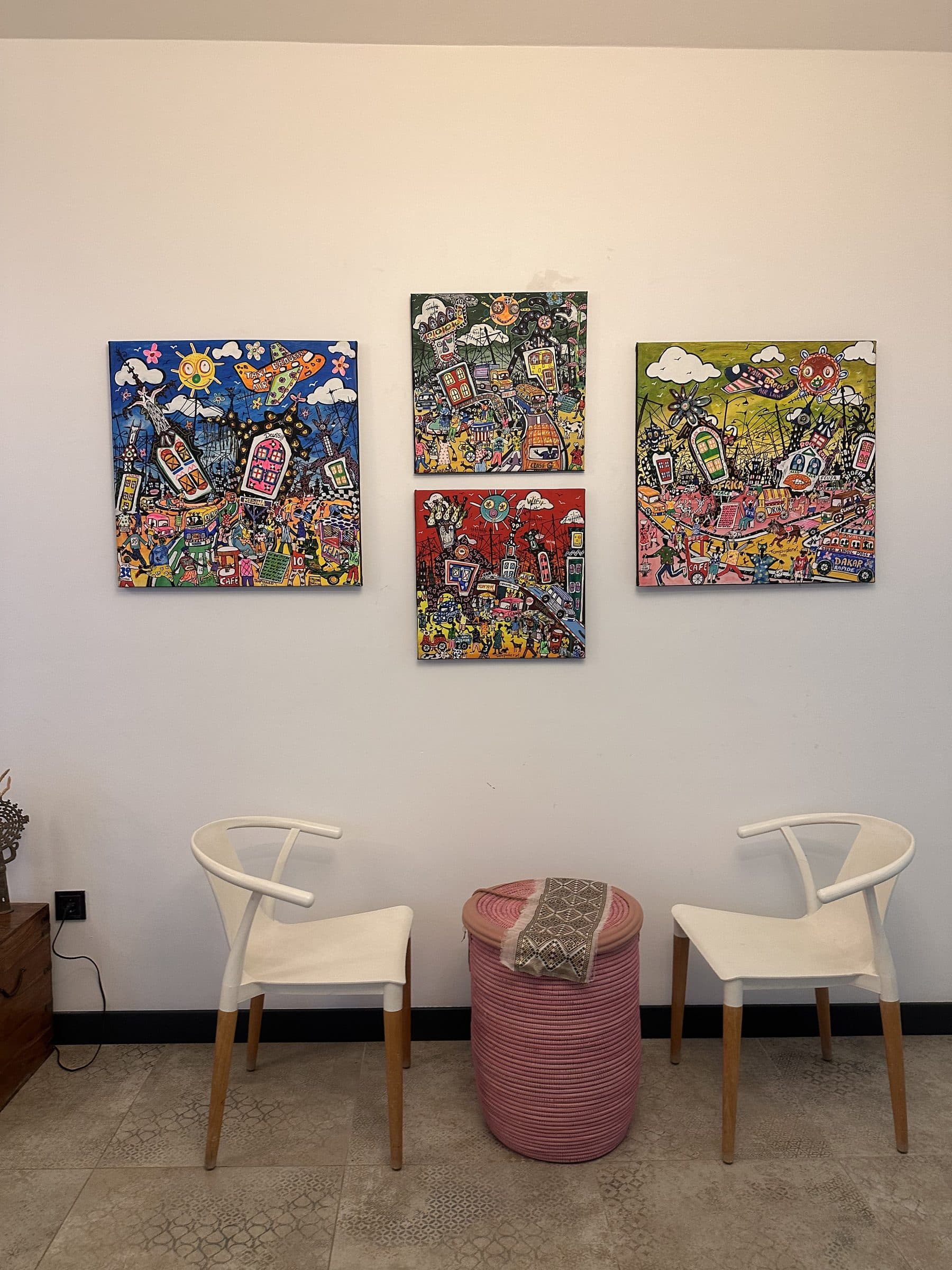
The works shown at the Ge'eza gallery are available to acquire, with a price on request and a certificate of authenticity signed by the artist. To find out which Malagasy works are on show right now, ask the team or see the artists page. For future dates, nothing is confirmed here. The events page and the monthly newsletter are the sources to follow.
Visiting
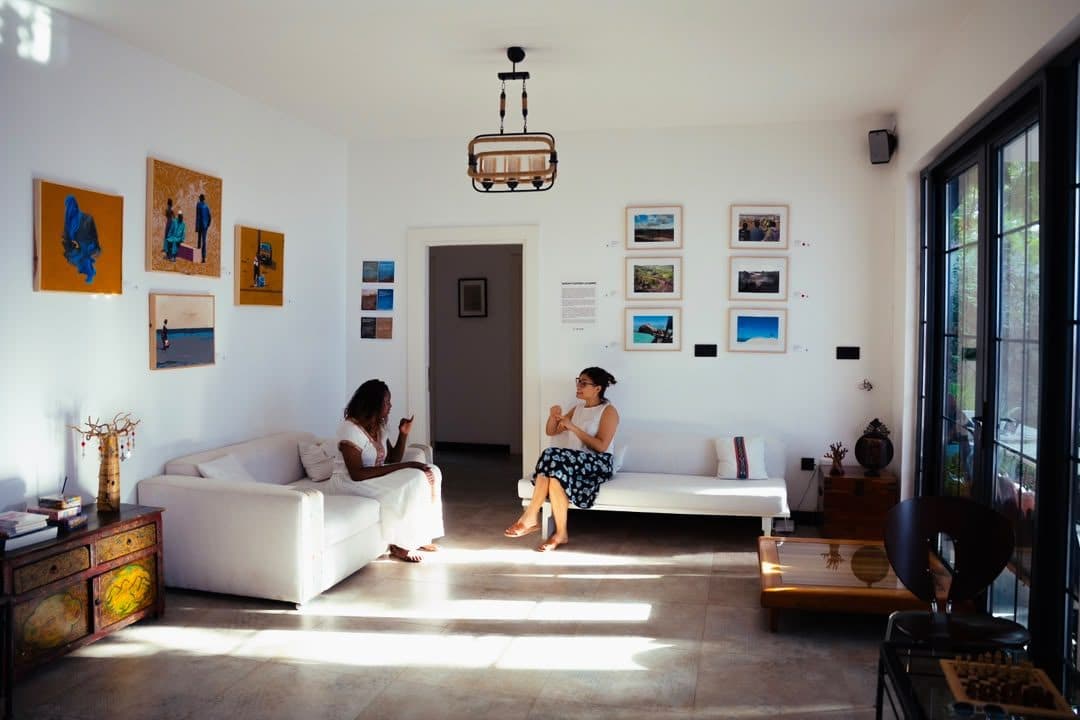
The house is open Tuesday to Sunday, 8am to 10pm, at 656 avenue Birago Diop in Point E, with a gallery lounge, a glass-roofed room and a terrace under the trees. You can have lunch, take a coffee, look at the canvases, or do all three in a row.
A way of looking worth keeping
If you are discovering Malagasy art for the first time, set aside the idea of a single style. Look instead at materials, gestures and the movements between the island, its diasporas and Dakar. The interest lies in that variety.
What to ask the team
When you visit, a few questions can open the conversation. Which artists have been shown in the house? Which works are currently on view? Is there a profile page for the artist that caught your eye? The team can point you to the artist pages, to the events page and to the house calendar, and explain how works are sold: price on request, certificate of authenticity signed by the artist, payment by Wave, Orange Money, bank card or on site, collection in Point E or shipping on a quote.
A note on sources
For detailed knowledge on lamba traditions, regional styles or individual artists, specialist books, museums and the artists themselves are the best sources.
Frequently asked questions
What is Dia Nifanena?
A Malagasy day held at Ge'eza on Sunday 7 June 2026: creations, encounters and flavours, with coffee-shop painting workshops, a market, live music and a coffee ceremony.
Who were the artists of Dia Nifanena?
Tefy KHT and Sarah Custer-Lalanne.
What is a lamba?
A rectangular piece of cloth worn over the shoulders or around the body, an emblem of Malagasy culture.
Is another Malagasy day planned?
Dates are published on the events page once confirmed.