
Food · 13 October 2026
African Food in Dakar: Beyond Thieboudienne
African food in Dakar at Ge'eza, Point E: eating Ethiopian and Senegalese food under one roof, what the two cuisines share, and how to build a meal across both traditions.
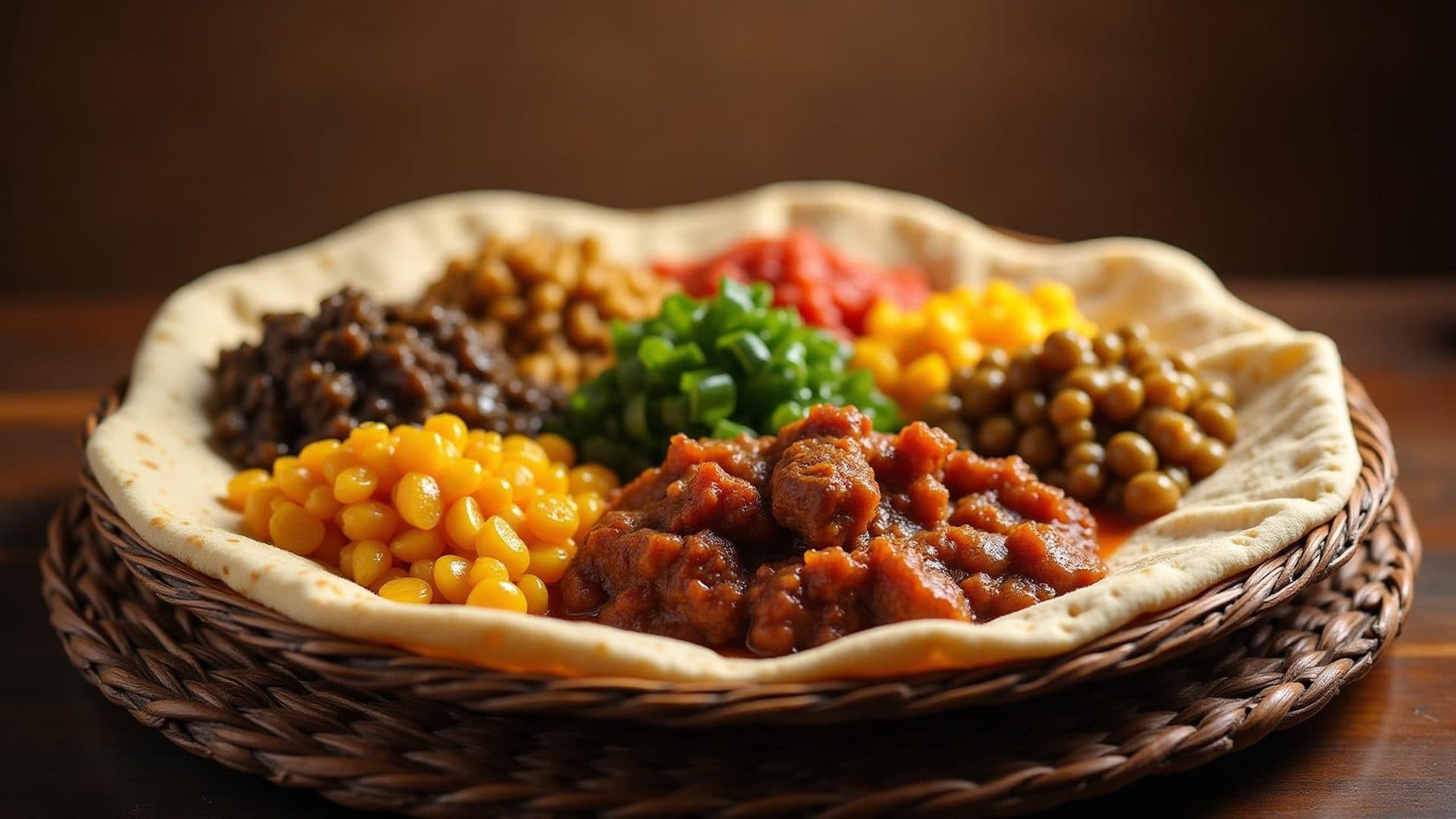
To explore African food in Dakar beyond thieboudienne, Ge'eza brings Ethiopian cooking and a Senegalese dish of the day together under one roof, served in a villa in the Point E district, open Tuesday to Sunday. The two traditions, born thousands of kilometres apart, share more than most people expect: a shared plate at the centre of the table, eating with your hands, and a respect for time spent together over a meal.
Two cuisines, one roof
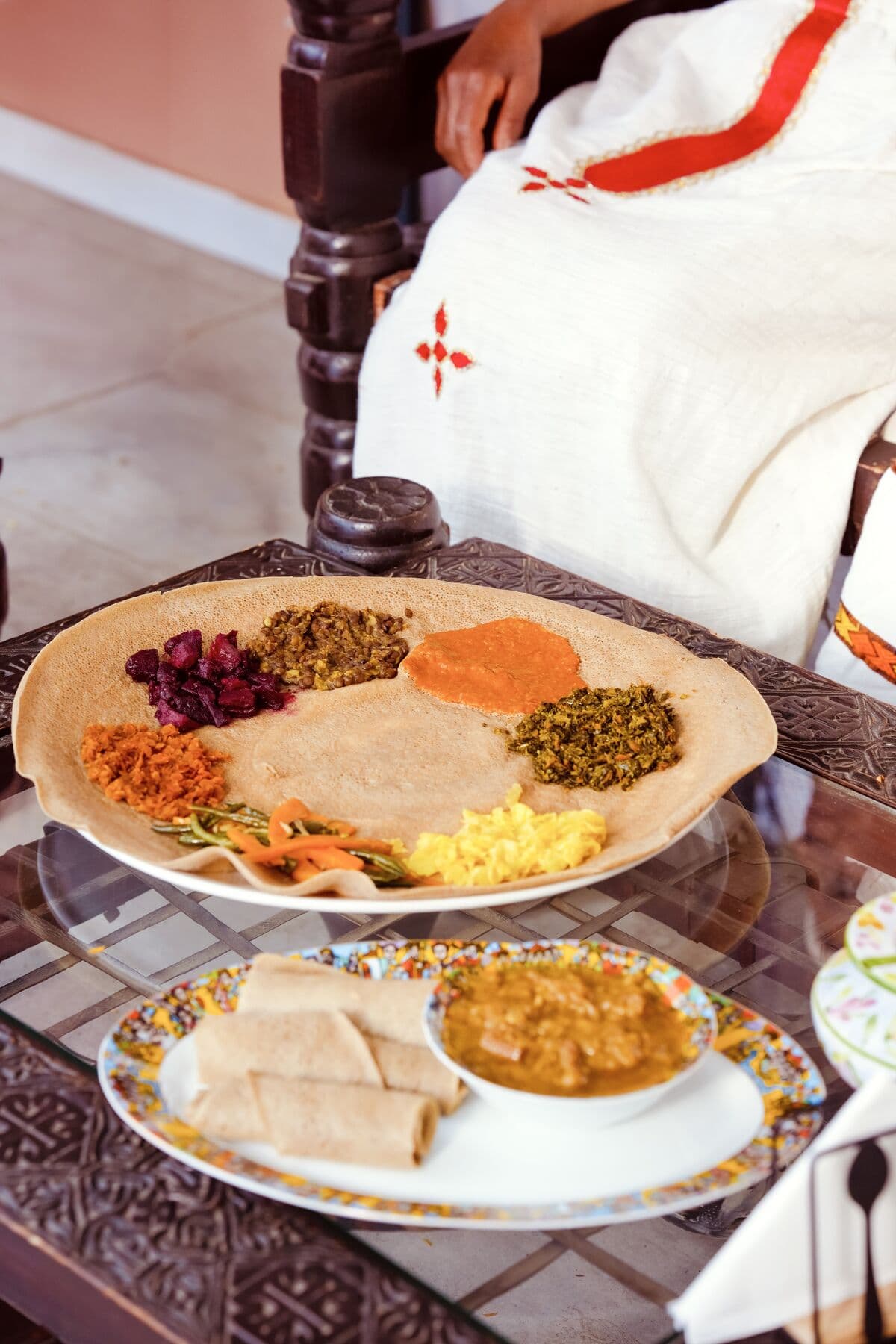
At Ge'eza, the choice is not between Ethiopia and Senegal but both, depending on the day and the mood, under one villa roof rather than two separate addresses. At midday, Tuesday to Friday, a Senegalese dish changes every day: mafé, thiéboudienne, supou kanja, chicken yassa, at 5,500 F with a drink and attaya. The rest of the week, and for any evening meal, the Ethiopian menu takes over, with its vegan fasting dishes, its meat dishes cooked with kibbeh, and beyaynetu, which brings seven preparations together on one injera.
What the two cuisines have in common
Beyond the spices and ingredients, which differ sharply from one tradition to the other, Ethiopian and Senegalese cooking share a similar way of thinking about a meal. The dish is set at the centre of the table and shared, rather than divided into individual portions. People eat with their right hand, both for Ethiopian food and for many traditional Senegalese dishes. And in both traditions, a meal eaten together counts for more than a meal eaten alone: conversation is part of the dish.
Rice and fish, the backbone of Senegalese cooking as in thieboudienne, find their Ethiopian counterpart in injera and slow-cooked sauces, with teff standing in for rice as the base of the meal. In both cases, a long-simmered sauce, berbere on one side, tomato or peanut sauce on the other, carries most of the flavour, built up over hours rather than minutes.
Where the two menus already meet
Some dishes already blur the line between the two cuisines. Sambusa, a fried pastry filled with lentils or meat, appears on the Ethiopian menu and in Senegalese habits alike, in closely related forms. Fataya, a Senegalese pastry, and the Ethiopian sambusa often sit on the same snack table, at 500 F and 1,500 F for two pieces. They make a good starting point for anyone discovering both cuisines in a single visit.
Building a meal across both traditions
For anyone who wants to try both cuisines in a single meal, the simplest order is to start with sambusas, a pastry of Ethiopian origin that is also familiar in Senegal, then choose between the Senegalese dish of the day at midday or an Ethiopian dish in the evening, rather than trying to fit both into the same sitting. For a table that genuinely wants both at once, Ye Fisig Beyaynetu brings seven fasting sauces and two meat sauces together on one platter, at 8,000, 13,000 or 19,000 F depending on the number of guests, a format built so no one has to choose.
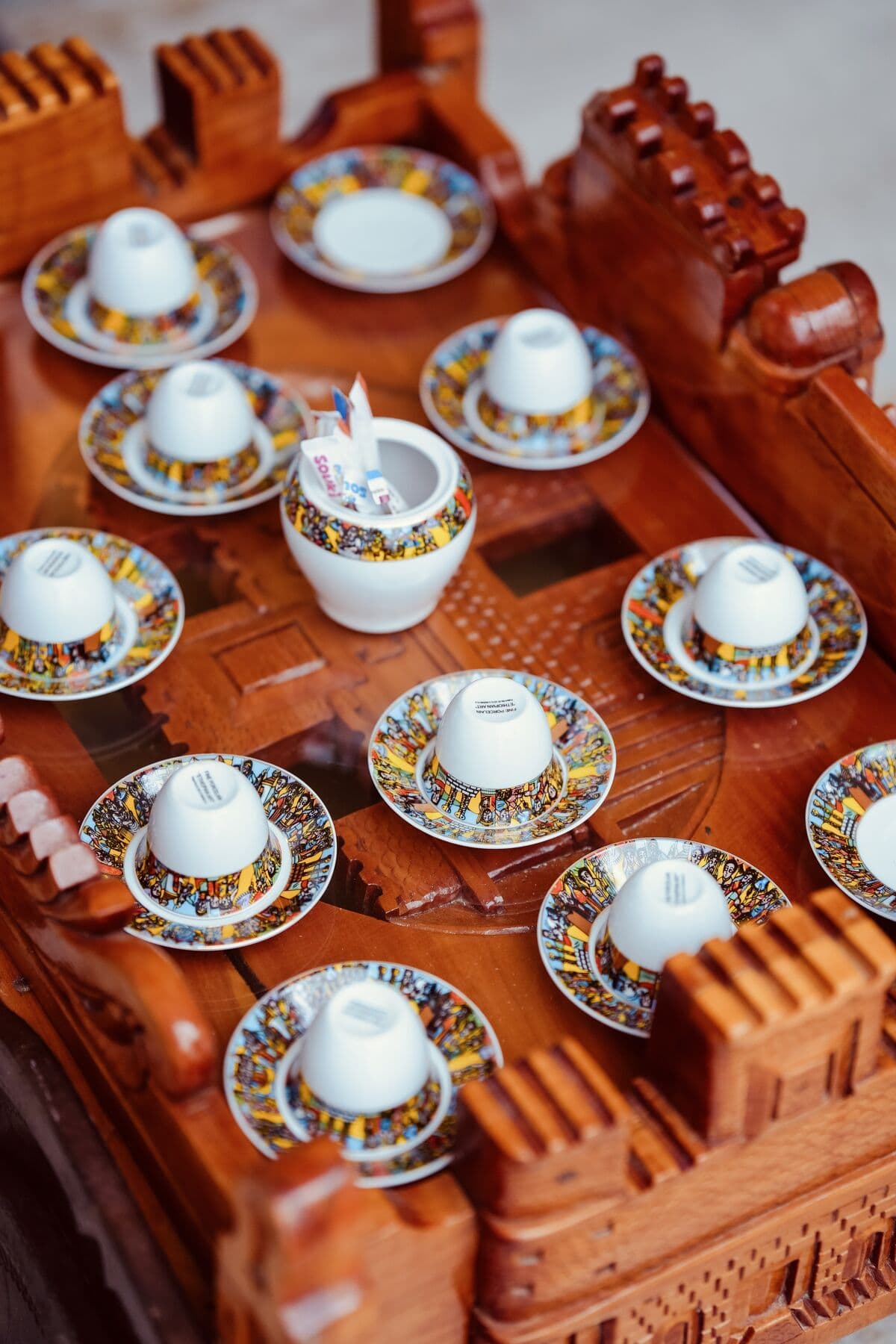
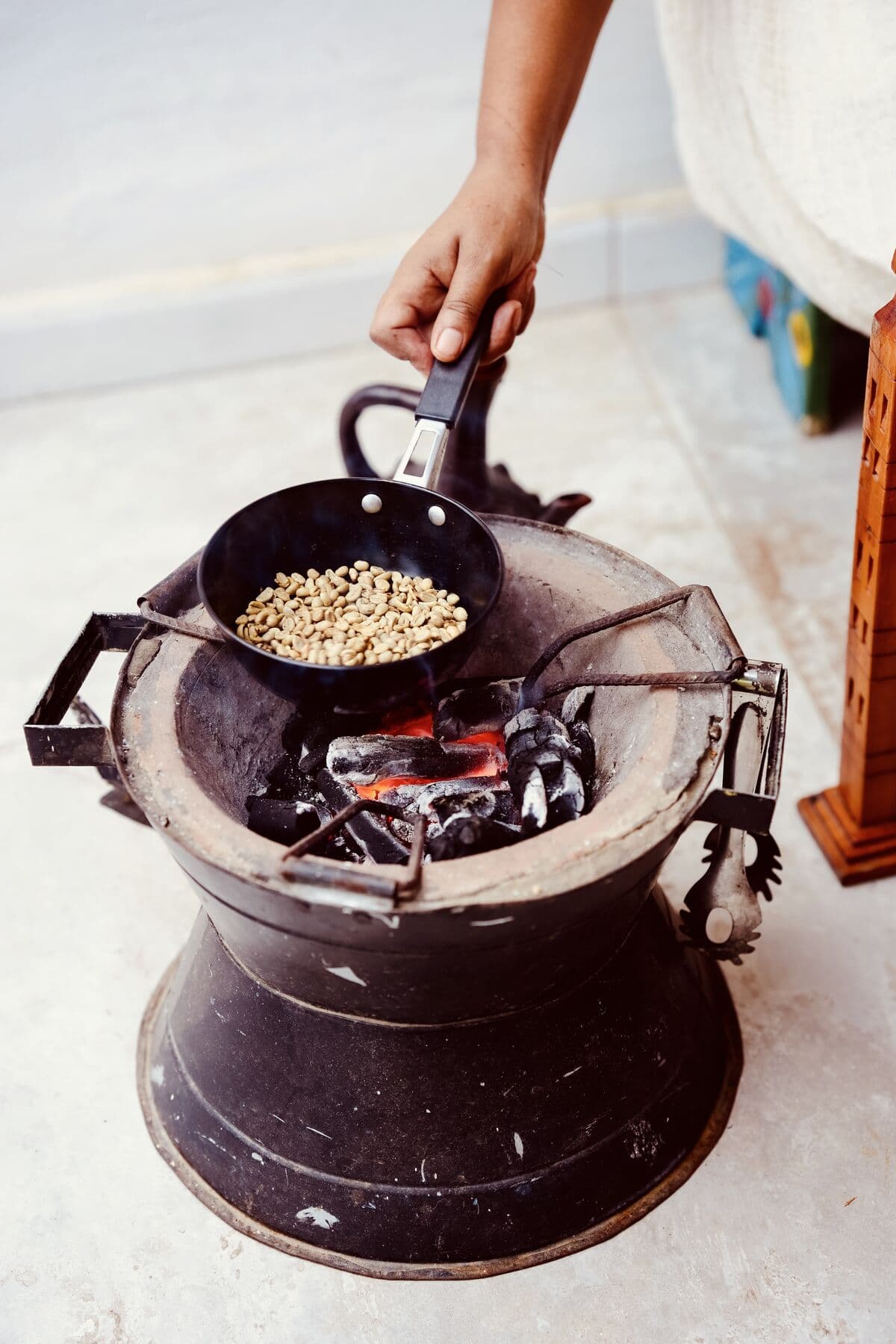
On the drinks side, bissap, ginger and bouye, typically Senegalese, sit alongside Ethiopian tej and coffee prepared as a ceremony, at 5,000 F per person for about 45 minutes.
Morning, two approaches to breakfast
Ethiopian breakfast, served from 8am to 11am, offers foul, beans stewed in spices at 5,500 F, or chechebsa, flatbread crumbled with berbere and spiced butter, at 4,500 F. These are substantial dishes, built to start the day, in the spirit of a hearty Senegalese breakfast rather than a light continental one. Both traditions share this idea of a morning meal meant to carry you through.
Booking to try both cuisines
To put together a meal across both traditions, booking on the booking page or on WhatsApp at +221 78 660 07 07, and mentioning the wish to try both the Ethiopian menu and the Senegalese dish of the day, lets the team suggest an order of dishes suited to the group and the time of day.
For a closer look
For the detail of the Senegalese dish of the day and its weekly calendar, Senegalese dish of the day adds to this reading. For a wider introduction to Ethiopian cooking, the Ethiopian food guide covers every dish.
The Senegalese dish of the day, day by day
The Senegalese side of the menu is not a fixed dish but a different plate each weekday, at midday only. On Tuesday it is mafé, a peanut stew simmered slowly until rich and smooth, one of the most recognisable dishes in Senegal. Wednesday brings thiéboudienne, the national dish: rice cooked in a fragrant tomato sauce, served with fresh fish and market vegetables. Thursday's supou kanja is a thick okra soup, simmered gently with fish and local spices, with a texture unlike anything on the Ethiopian side of the menu. Friday closes the week with chicken yassa, marinated in lemon and caramelised onions, sharp and fragrant rather than built on a long-cooked sauce.
Compared with the Ethiopian dishes, which lean on berbere, a dried chili blend simmered for hours into siga wot or doro wot, the Senegalese dish of the day draws its depth from peanut, tomato, okra or citrus rather than a single spice blend. Trying one Senegalese lunch and one Ethiopian dinner in the same week, rather than the same sitting, is often the easiest way to notice the difference.
Frequently asked questions
Can I eat Ethiopian and Senegalese food in the same meal at Ge'eza?
Yes, Ye Fisig Beyaynetu brings fasting sauces and meat sauces together on one platter, and the menu offers both cuisines depending on the time of day.
Is the Senegalese dish of the day served every day?
No, only at midday, Tuesday to Friday.
What do the two cuisines have in common?
A shared dish at the centre of the table, eating with the right hand, and a long-simmered sauce at the heart of the meal.
Which dish would you recommend to try both traditions at once?
Ye Fisig Beyaynetu, which brings seven Ethiopian fasting sauces and two meat sauces together on one injera.