
Guide · 22 October 2026
African Contemporary Art in a Modern Interior: Hanging It Right
Hanging a contemporary African painting in an apartment in Paris, Brussels, London or New York mostly comes down to scale, light and what surrounds it, more than to matching a particular style.
Hanging a contemporary African painting in an apartment in Paris, Brussels, London or New York mostly comes down to three things: the scale of the piece against the wall, the light that moves across it through the day, and how it sits alongside furniture already in place. Style matters less than people often assume: a well-chosen painting can work in a very minimal living room just as well as in a more layered interior.
Scale comes first
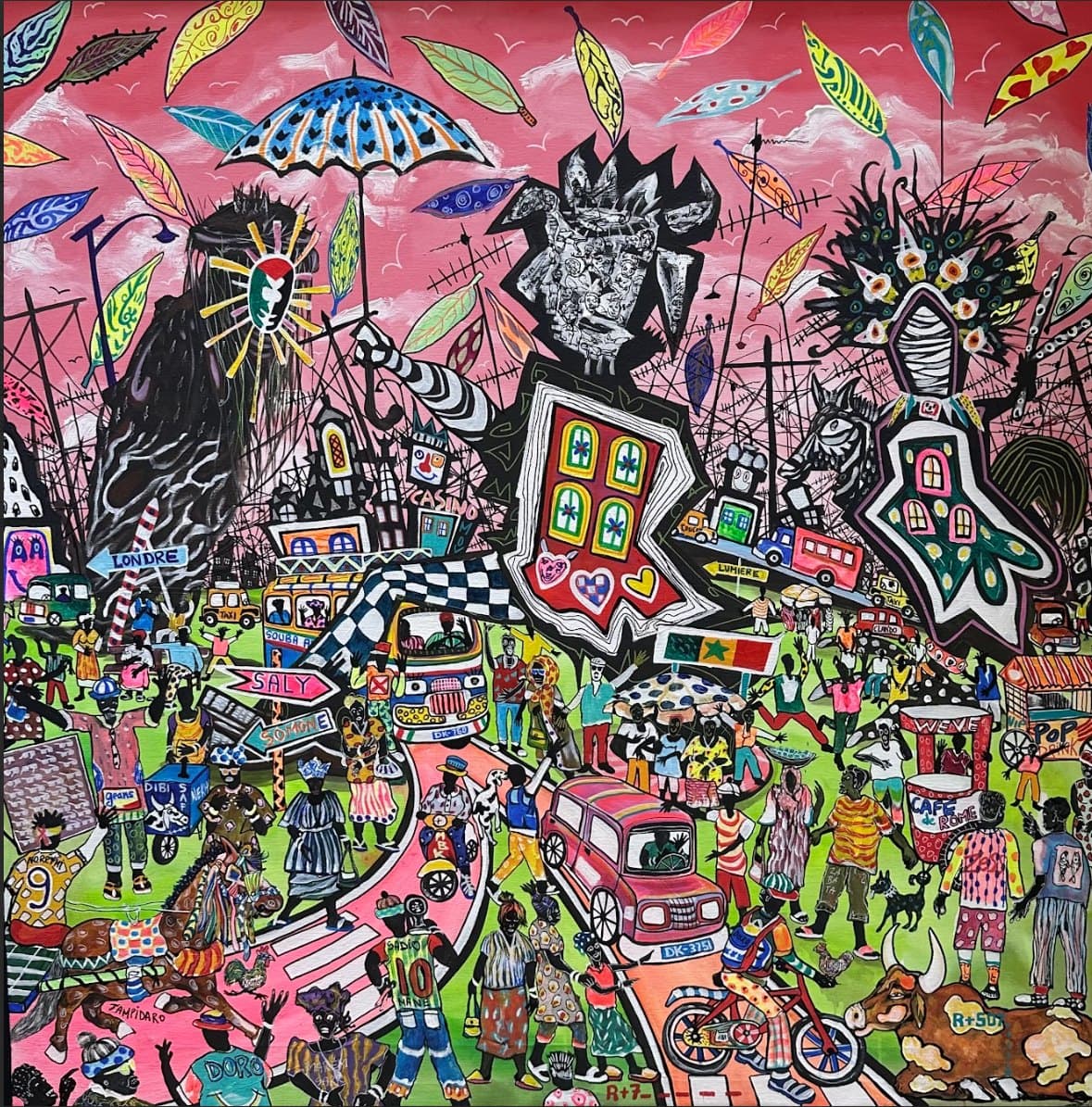
The first question is not style but size. A painting that is too small on a large wall gets lost, while one that is too big in a narrow hallway overwhelms the space. The pieces shown at Ge'eza's gallery come in several formats: some around 100 by 100 cm suit a mid-sized living room, while larger pieces, such as Tampidaro's "Totem dans la ville," at 150 by 150 cm, need a clearer wall to breathe. Measuring the available space before choosing a piece saves a lot of disappointment once it is hanging.
Light changes everything
A modern interior often plays with abundant natural light, sometimes topped up with lamps in the evening. A painting never reads quite the same way at different times of day: some colours stand out under cool daylight, others under warm evening light. Before committing to a final spot, it is worth holding the piece against the wall at different times of day, to see how it behaves under the room's real light, rather than only the gallery lighting under which it was first seen.
Living alongside design furniture
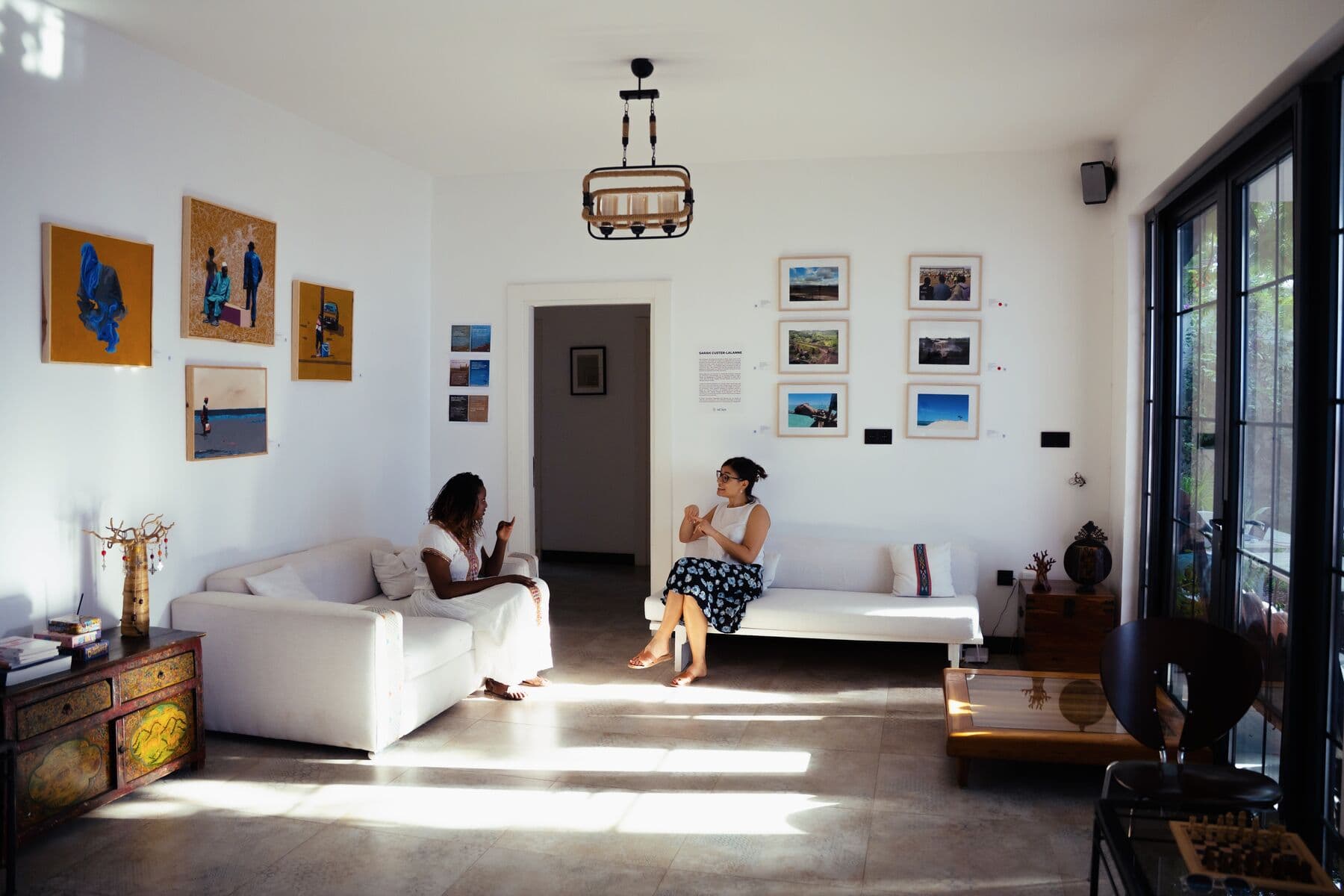
A contemporary African painting does not need a themed interior to find its place. In a room full of design furniture, a strong piece can become the one splash of colour in the room, without needing other objects that echo the same world. The opposite works too: a painting can simply complete a room already filled with other pieces, without trying to dominate the space. The key is to leave room to breathe around the work, rather than squeezing it between two pieces of furniture or other frames.
Choosing a piece with the final wall in mind
It helps to browse work online with that wall already in mind: pages on the gallery give each piece's exact title, technique, dimensions and year, which makes it easy to compare formats before deciding. Asking for a photo of the piece from several angles, over WhatsApp, also helps picture it more precisely in the intended space, especially when buying from abroad.
Beyond the canvas: art prints
For a smaller space, or to start without committing to a one-of-a-kind piece, Ge'eza's concept store also carries art prints, an alternative to an original painting for anyone looking for a first African piece without aiming straight for a large canvas.
Different from a Dakar interior
Hanging African art in an apartment in Paris, Brussels or London does not follow the same constraints as a home in Dakar, where the light, climate and materials are noticeably different. The guide on art for your home in Dakar covers those questions for a Senegalese interior, a useful companion if you split your time between two homes.
Hanging several pieces together
In a modern interior, it sometimes makes sense to hang several African paintings together rather than a single standalone piece. In that case, it helps to choose works that share something in common, whether a similar colour palette, a comparable format, or a related technique, rather than mixing very different styles on the same wall. A set that is too disparate often reads as cluttered, even when each piece is attractive on its own. Leaving an even gap between canvases, rather than crowding them together, also helps each piece keep its own presence.
Framed works on paper need a second look
Some pieces, such as those made on kraft paper and shown under glass, need particular attention in a modern interior: the glass reflects ambient light, which can create distracting glare depending on the wall's angle and the position of windows or lamps. Before hanging this kind of piece, it is worth checking from a few spots in the room that the glare does not get in the way of seeing the work at the time of day you spend the most time in that part of the room.
Getting a piece to an interior abroad
A canvas bought in Dakar and destined for a modern interior abroad needs packing suited to the journey, especially for canvas formats not mounted on a rigid stretcher. Asking the gallery for advice on the right packing before shipping, rather than after receiving a poorly protected parcel, avoids most of the problems that come with transport.
Taking it further
For any question about a specific piece before hanging it, Ge'eza's team answers on WhatsApp at +221 78 660 07 07 or by email at geezacultures@gmail.com, with details on technique, exact dimensions, or extra photos from different angles.
Frequently asked questions
How do I know if a painting is too big for my wall?
By measuring the available space before choosing, then comparing it with the exact dimensions given on the artwork's page.
Does my interior need a specific style to hang contemporary African art?
No, a well-chosen piece works in a minimal interior just as well as in a more layered one, as long as its scale is right.
How do I judge the light before hanging a piece?
By holding the painting against the wall at different times of day, to see how its colours respond to the room's real light.
Is there an alternative to an original painting for a small space?
Yes, Ge'eza's concept store carries art prints, an option for starting out without committing straight away to a large one-of-a-kind piece.