
Art · 6 October 2026
Senegalese Reverse Glass Painting: The Souwère, Origins and Subjects
Senegalese reverse glass painting, or souwère, is painted backwards on a sheet of glass. Origins, subjects, artists often cited, and where to see and buy it in Dakar, sticking to well-established facts.
Senegalese reverse glass painting, called souwère in Wolof, is painted backwards on a sheet of glass: the artist first paints the details and outlines, then the flat areas of colour, and the image is viewed through the glass. Practised in Senegal since the early 20th century, the technique is associated with portraits of religious figures, scenes from legends and subjects from daily life. It is a popular art that has, over time, become a collected one.
A technique done in reverse
Painting under glass means thinking the image backwards. On glass laid flat, you start with what will appear in the foreground: lines, faces, inscriptions, highlights. Then come the colours, then the background. Once the paint is dry, the sheet is turned over: what you see is what was painted first. No retouching is possible, which demands great mastery.
The result has a glossy look, bold colours and sharp outlines. That is what makes souwère instantly recognisable.
Where it comes from
Reverse glass painting is a tradition that has travelled widely, notably in Europe and North Africa. It reached West Africa and Senegal in the early 20th century, through trade and religious circulation. Senegalese artists made it their own and gave it a vocabulary deeply rooted in local life. We keep to these broad lines here, as the details of transmission vary by source.
Subjects
Souwère often depict:
- figures of religious life: portraits of Cheikh Ahmadou Bamba, founder of the Mouride brotherhood, are among the most widespread images, drawn from a single photograph according to a widely reported account;
- scenes drawn from stories and legends, such as those of the Buraq, the winged mount of the Islamic tradition;
- scenes of daily life, festivals, landscapes, trades;
- decorative motifs and calligraphic inscriptions.
These images are found in homes, shops, buses and places of worship. They are part of the country's visual landscape.
A few names often cited
Among the artists most often mentioned when Senegalese reverse glass painting comes up are Gora Mbengue, regarded as one of the reference figures of the genre, and Anta Germaine Gaye, one of the best-known artists. Other painters carry the tradition on today. To learn more about their careers, consult specialist books and catalogues.
Where to see and buy it
Several places let you discover souwère in Dakar: museums, craftsmen's workshops, art and craft markets, some galleries. Among museums, the Théodore Monod Museum is a useful stop for understanding the context of African arts. To buy, compare several workshops, ask who painted the piece and check the condition of the glass and colours.
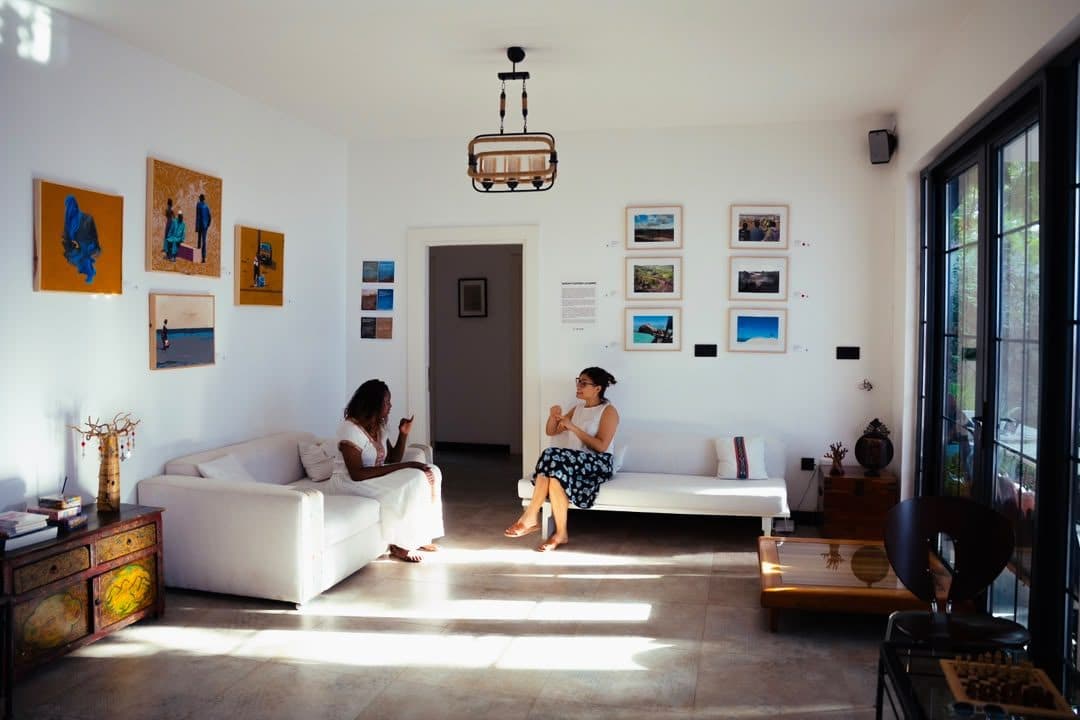
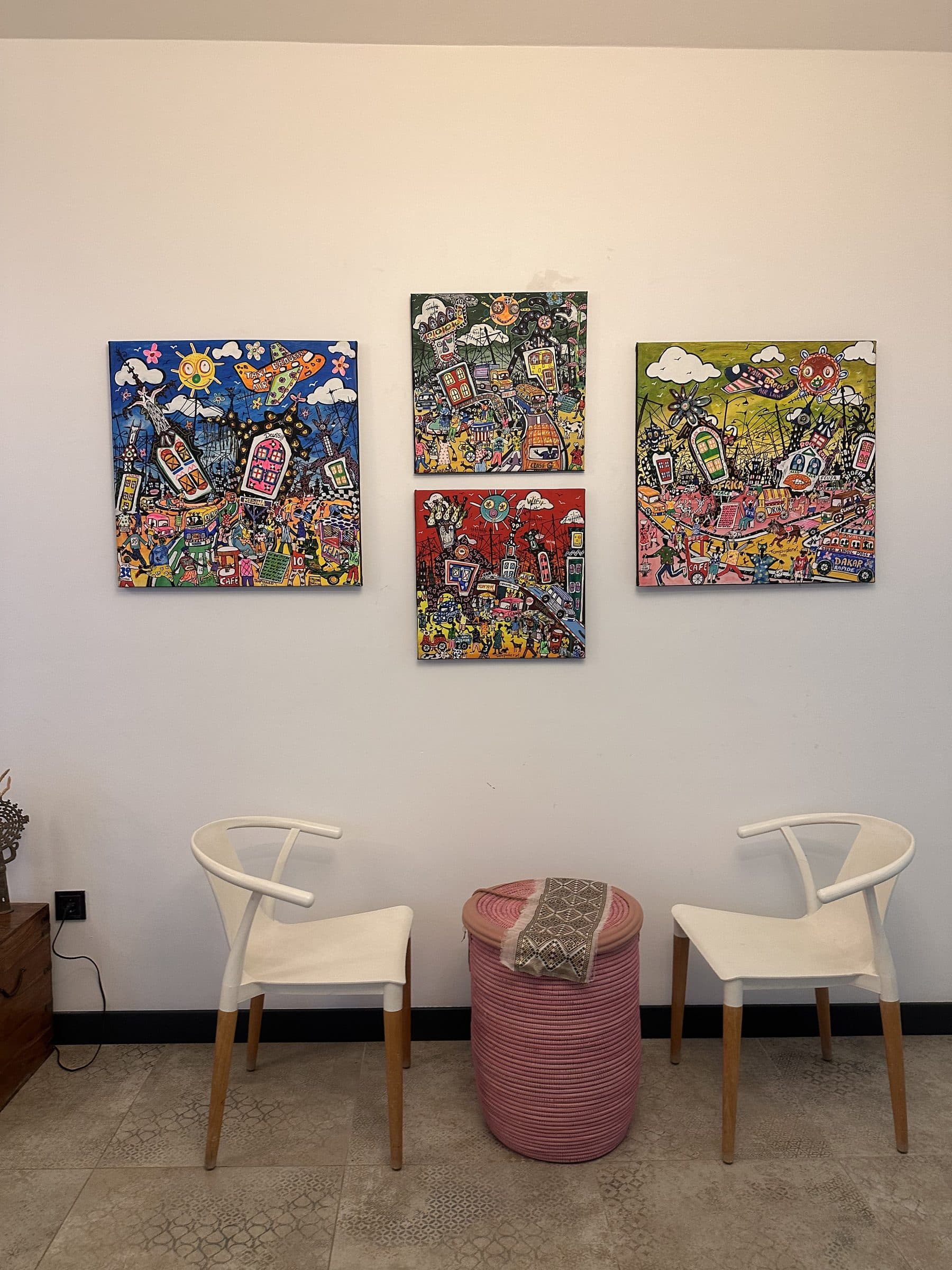
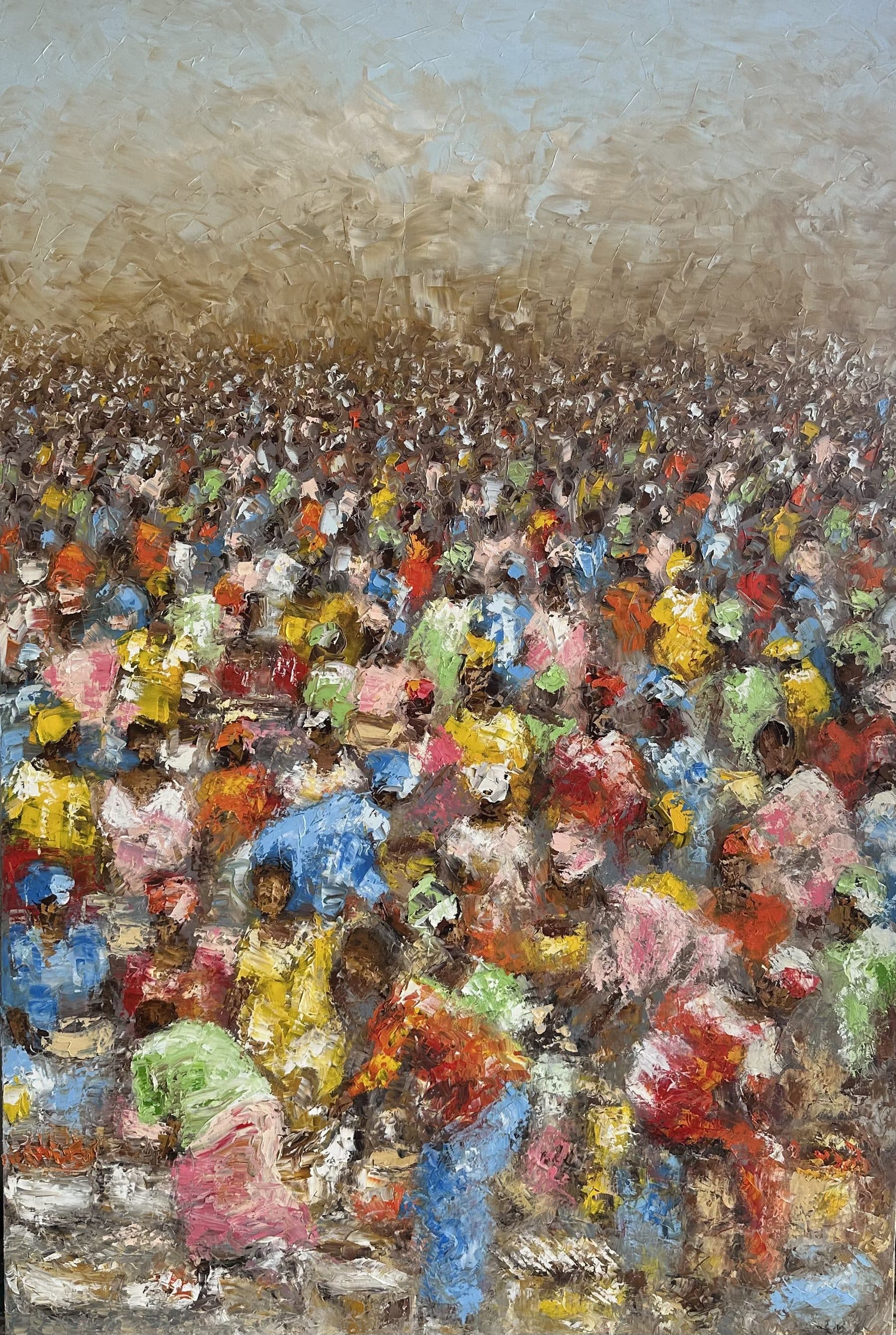
Ge'eza does not currently list any reverse glass painting among the works cited so far: the gallery shows notably "Figures (2025)" by Saadio, "Sans titre I" and "Sans titre II" (acrylic on canvas, 2025) and "Foule" (oil on canvas, 2025). To see what is available, visit the gallery page.
Tips for buying a reverse glass painting
- Look at the work up close. Colours should be crisp, the glass free of cracks.
- Ask for the artist's name and, if possible, a signature or document.
- Avoid direct sun and humidity, which damage the paint on the back of the glass.
- Pack carefully: glass is fragile, especially when travelling.
- Compare prices between several places before deciding.
An art in dialogue with others
Reverse glass painting is sometimes considered apart, as a popular art. Yet it speaks with contemporary art: some artists borrow its codes, others reinterpret it. It is a good example of how Senegalese creation draws on its own history. To widen your view, read the guide to buying contemporary art in Dakar.
An art of colour and light
Glass gives colours a particular brilliance: light passes through the sheet, reflects off the paint and sends back a red, green or yellow of rare intensity. Artists play on the contrast between dark outline and luminous flat area. That is what makes a souwère easy to recognise, even from afar, and what explains its success with collectors and the general public alike.
An art that evolves
Reverse glass painting is not limited to tradition. Contemporary artists return to it, sometimes to renew its subjects, sometimes to divert its codes. That vitality shows the technique is not frozen: it remains a language, used to say things about today.
Looking after a reverse glass painting
The paint sits on the back of the glass, protected by the sheet itself, but it can still suffer. Keep the piece away from direct sun, which fades colours, and from damp, which can lift paint at the edges. Clean only the front of the glass, with a soft dry cloth, and never spray liquid that could seep behind the frame. If you notice flaking, ask a conservator rather than trying to fix it yourself. In Dakar's humid climate, a little air behind the frame and a dry wall make a real difference.
Reading a souwère
Look first at the outline, which carries the drawing and often the inscriptions. Then look at the flat colours, which fill the shapes. Finally, notice the background, which in many pieces is a single bright colour that sets the figures off. Reading the image in that order, the way it was painted but in reverse, helps you see how the artist built it.
Frequently asked questions
What does souwère mean?
It is the Wolof word for reverse glass painting, a painting made backwards on glass.
Since when has reverse glass painting been practised in Senegal?
Since the early 20th century, according to generally accepted accounts.
What subjects does it show?
Religious figures, scenes from legends, daily life and decorative motifs.
Does Ge'eza sell reverse glass paintings?
None is listed among the works currently shown. Contact the team to find out which works are available.