
Guide · 27 October 2026
Hosting Ethiopian Business Partners in Dakar
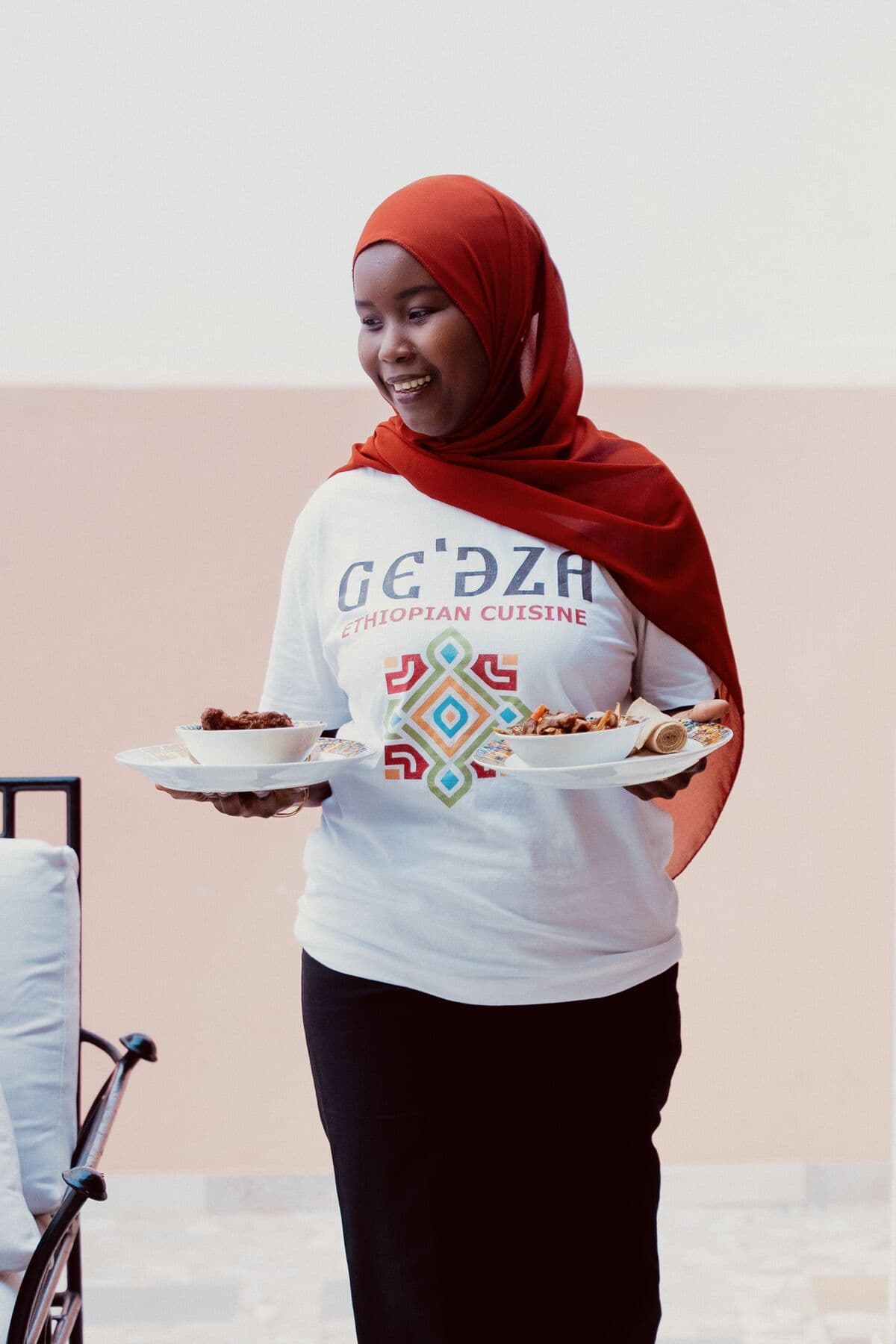
To host business partners visiting from Ethiopia in Dakar, Ge'eza offers a menu they will recognise, beyaynetu, doro wot, kitfo ordered 24 hours ahead, a coffee ceremony, and a gallery of Senegalese artists as a conversation piece.
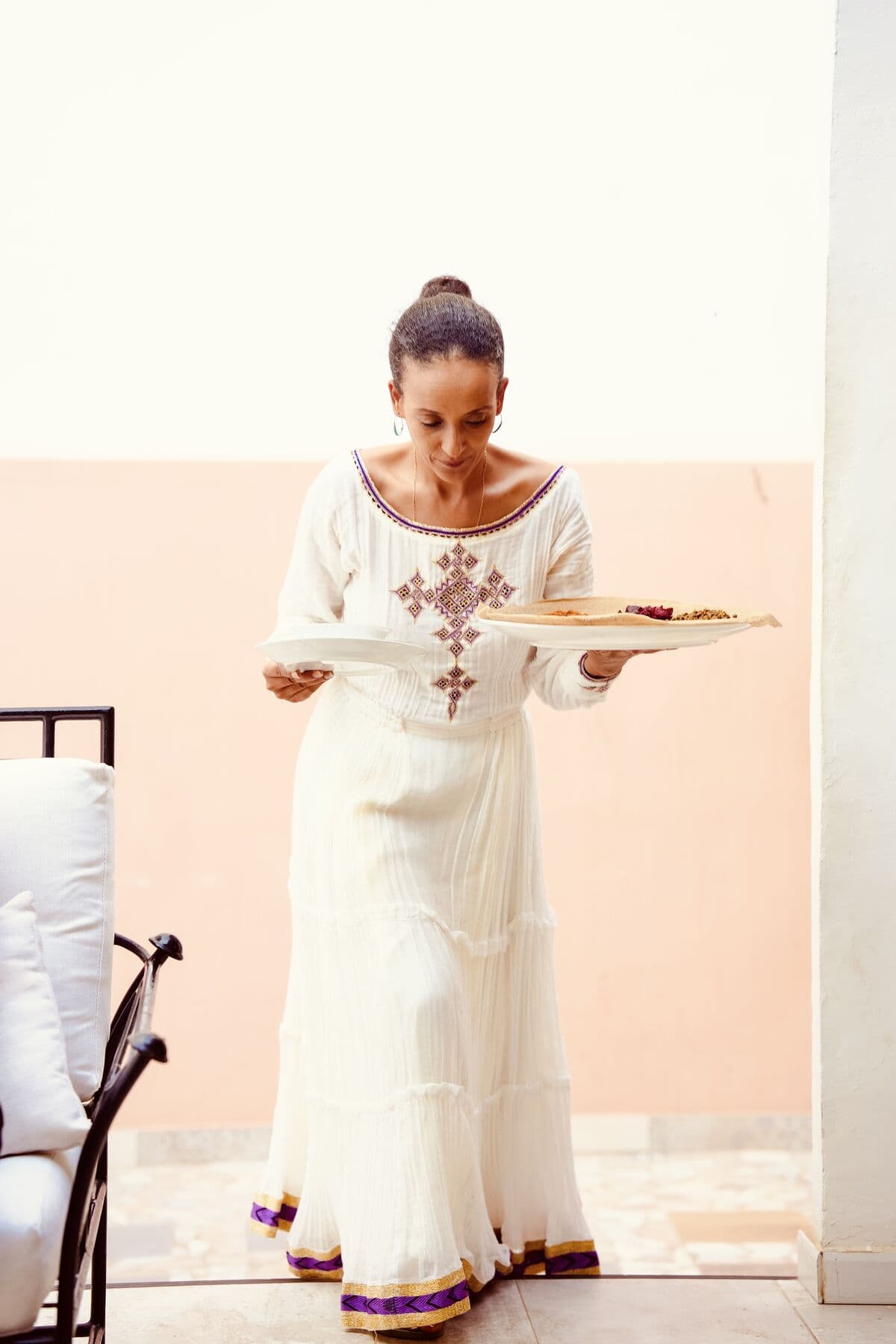
To host business partners visiting from Ethiopia in Dakar, Ge'eza, in Point E, offers a menu they will recognise: beyaynetu, doro wot, kitfo ordered 24 hours ahead, followed by a coffee ceremony. The gallery, which shows the work of Senegalese artists, then gives a natural conversation topic, well beyond a plain business meal.
A meal that reassures rather than surprises
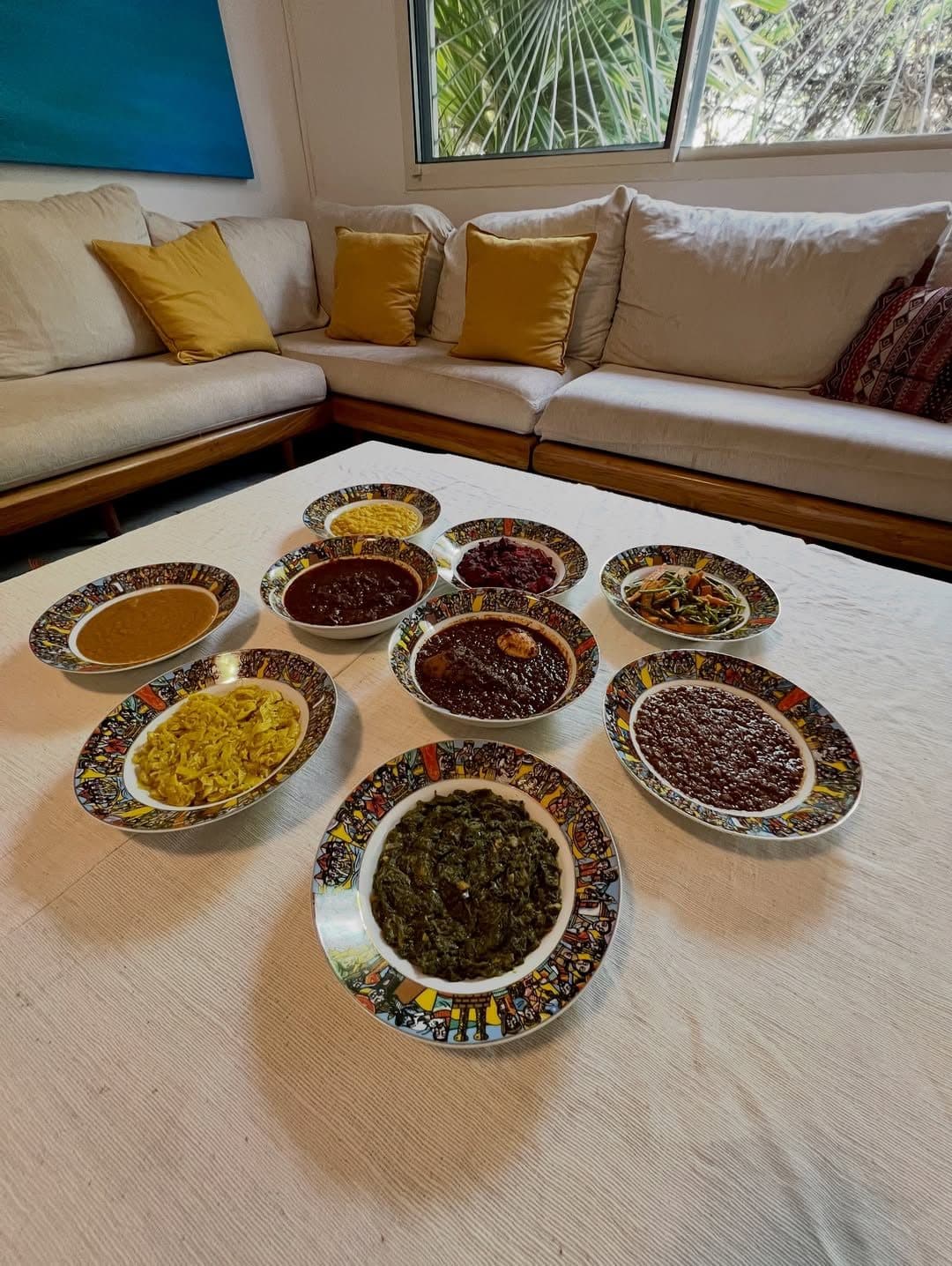
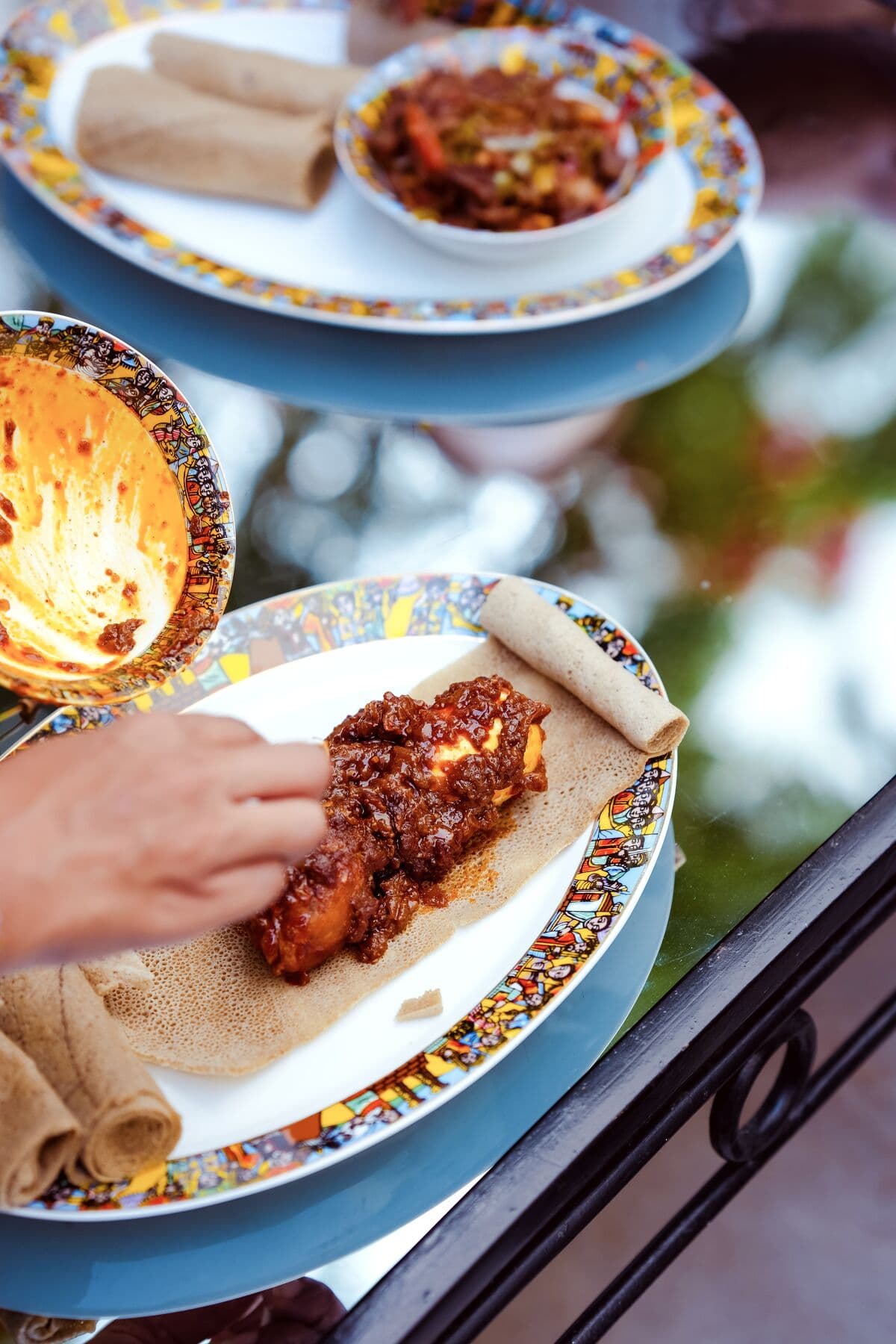
Hosting Ethiopian partners is different from hosting a delegation discovering the local food for the first time: the point here is not to surprise, but to offer a table they will recognise, prepared with the same care as at home. Beyaynetu, the platter of vegan fasting dishes on injera, and doro wot, the festive chicken stew at 9,000 F, are both immediate reference points for Ethiopian guests. Kitfo, seasoned minced meat, is ordered 24 hours ahead: for a visit planned in advance, it is worth mentioning at the time of booking. The guide hosting a delegation in Dakar covers the general organisation of a reception for any nationality; this page focuses on what changes when the guests come specifically from Ethiopia.
The coffee ceremony, a ritual they will know well
The coffee ceremony runs through three rounds, Abol, Tona, Baraka, with incense and dabo, at 7,000 F per person for the full ceremony, about 45 minutes. For Ethiopian guests, this ritual is nothing new: it is a familiar moment, which can instead become a point of exchange about how it is practised from one household to another, from one region to another. Booking 24 hours ahead still helps, especially for a group, so the team can prepare the rounds accordingly.
A bridge between two capitals
Addis Ababa and Dakar play different roles on the continent, one as the seat of African diplomacy, the other as an Atlantic crossroads of West Africa. The guide Addis Ababa and Dakar: two capitals in dialogue looks at what the two cities share and what sets them apart. For visiting Ethiopian partners, bringing up this dialogue between the two capitals makes for a richer opening than a plain welcome.
The gallery, a topic beyond the meal
After the meal or the coffee ceremony, a visit to the gallery, which shows works by Senegalese artists, opens a different conversation from the one about work: a title that intrigues, a format that surprises, a technique worth asking about. For guests who already know Ethiopian food well, this moment often becomes the one that stands out most from the visit, since it shows a side of Dakar they would not necessarily associate with a working lunch.
Planning the logistics
For a visit from Ethiopian partners, it helps to confirm in advance the number of guests, the dishes wanted (especially if kitfo is requested) and the arrival time, so the kitchen and the service are ready. Beyond eight people, an extra message on WhatsApp, on top of the online booking, helps the team set the table. For a format that needs more privacy, the gallery lounge can be hired on request: the spaces page covers the formats offered by the house.
Leaving room for Senegal in the visit
A visit from Ethiopian partners in Dakar does not need to stick only to food they already know. The Senegalese dish of the day, served Tuesday to Friday at lunchtime at 5,500 F with a drink and attaya included, mafé on Tuesday, thieboudienne on Wednesday, supou kanja on Thursday, poulet yassa on Friday, offers a simple way to introduce a local reference point, alongside the Ethiopian table rather than instead of it. For a lunch that falls on one of those days, offering both options at the table, an Ethiopian dish for those who want something familiar, the Senegalese dish for those who would rather discover something new, gives the visit a double colour, Ethiopian and Senegalese, that fits well with the spirit of the place.
A simple running order
A sequence that works well for a visit from Ethiopian partners: a welcome drink, a shared meal around beyaynetu or doro wot, then a coffee ceremony to close, followed by a stop at the gallery if time allows. The whole thing fits comfortably into half a day, without feeling rushed.
Allowing time for conversation
A meal with Ethiopian partners often takes longer than an ordinary business lunch, precisely because the table and the coffee ceremony become conversation topics in their own right. Planning for half a day rather than a fixed hour avoids cutting short an exchange that, more often than not, carries on naturally over a second round of coffee.
Booking
Booking can be done online on the reservation page, by phone, or on WhatsApp at +221 78 660 07 07, stating the number of guests, the time wanted and, if needed, the kitfo order 24 hours ahead.
Frequently asked questions
Does kitfo need to be ordered before the visit?
Yes, 24 hours ahead, mentioned at the time of booking.
Does the coffee ceremony need a separate booking?
It is best booked at the same time as the meal, ideally 24 hours ahead, especially for a group.
Can a space be hired to host Ethiopian partners?
Yes, the gallery lounge can be hired on request, depending on the format wanted.
Can the gallery be visited after the meal?
Yes, it is open during restaurant hours, which makes it easy to extend the visit without leaving the villa.